 2 months ago
92
2 months ago
92
Laura KuenssbergPresenter, Sunday with Laura Kuenssberg

 BBC
BBC
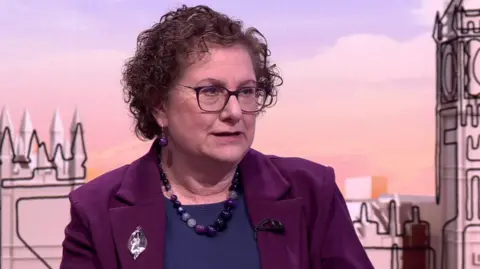
Dr Hilary Cass is the author of a major review into the treatment of children and young people questioning their gender
Children have been "weaponised" by both sides of a toxic debate about transgender rights, the author of a government review into the treatment of children and young people questioning their gender has said.
Dr Hilary Cass told Sunday with Laura Kuenssberg "people at the extremes" had caused "quite a lot of distress for young people".
She also suggested "unrealistic images and expectations on social media" had misled children, and that if some young people had "taken more time" they might not have pursued medical treatments.
Her 2024 review found gender medicine had been operating on "shaky foundations" when it came to evidence for medical treatment.
In an interview to be broadcast on Sunday, she said there was a "lack of realism about what transition would really mean and how hard it would be" - pointing to "quite intensive medical treatments" and "sometimes quite brutal surgeries".
She added: "There are a tiny number of people who will never be comfortable with their biological sex, with the gender associated with their biological sex.
"And for them, a medical pathway is the only way they're going to live their life comfortably. And we don't understand why that is, but we have to try and help those people thrive as much as the young people who are going to grow out of this."
Asked if children had been let down by an adult-led debate, Cass said "absolutely", adding they "were also caught up in all the issues about single-sex spaces and sports and safe areas for women which were actually not to do with the children but they were somehow part of a football within it".
"That's a real shame that children have been weaponised."
The vast majority of people in the middle of the debate were silent while the "people at the extremes" and rhetoric in the media had been "frightening for young people", the clinician said.
She added that some activists for trans rights had been "so strident that it's made it more difficult for trans people themselves who are just trying to live under the radar", while equally people who had taken the view no-one should ever transition had "similarly made it difficult".
Her review was commissioned after concerns about the treatment of growing numbers of children and young people with worries about their gender, particularly at the Tavistock Clinic in London.
Cass, who praised the government's guidance for schools in England published earlier this week, said it was important for there to be caution about very young children beginning the transitioning process because "if they socially transition too early we think they can get locked onto a trajectory that may not have been the correct natural trajectory for them".
The paediatrician said while some children did follow a medical pathway there were some "who go through two or three years of gender questioning and then desist".
Asked about why the number of children and young people who have gender dysphoria is increasing, Cass said it was "complex" but there was a different cultural context, with people "less locked into gender stereotypes".
"I think what has kind of misled children is the belief that if you are not a typical girl, if you like playing with trucks, or boys who like dressing up or that you have same-sex attraction that means that you're trans and actually it's not like that but those are all normal variations," she said.
"I think children and young people were being given a narrative that it's not okay to be anything but absolutely typical of the other girls on Instagram."
Cass said for those who will never be comfortable with the gender associated with their biological sex "a medical pathway is the only way they're going to live their life comfortably".
"And we don't understand why that is, but we have to try and help those people thrive as much as the young people who are going to grow out of this," she said.
Cass also said it was "vital" that a controversial trial of puberty blockers for under-16s went ahead, or "we're going to have ongoing charlatans just handing out inappropriate drugs", pointing to the private sale of the drugs - particularly online.
Puberty blockers - which suppress the hormones that cause puberty - are often prescribed to children questioning their gender as a way of stopping physical changes such as breast development or facial hair.
They were banned for under-18s after the Cass review raised concerns about their safety, but a clinical trial to assess their safety was announced last year.
Campaigners have questioned the ethics of it, while the charity Stonewall said it was "vitally important" that all LGBTQ+ people have access to high-quality, evidence-based and timely healthcare.
Cass denied that she had stopped young people and families getting the help they needed, saying the new centres would make sure people had "individualised treatment".
"The biggest hurdle at the moment is they are still working through the big backlog," she said.