 2 months ago
140
2 months ago
140
56 minutes ago
Chris MasonPolitical editor

 Reuters
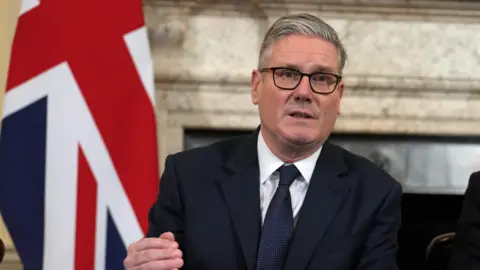
Sir Keir at a Cabinet meeting earlier this year
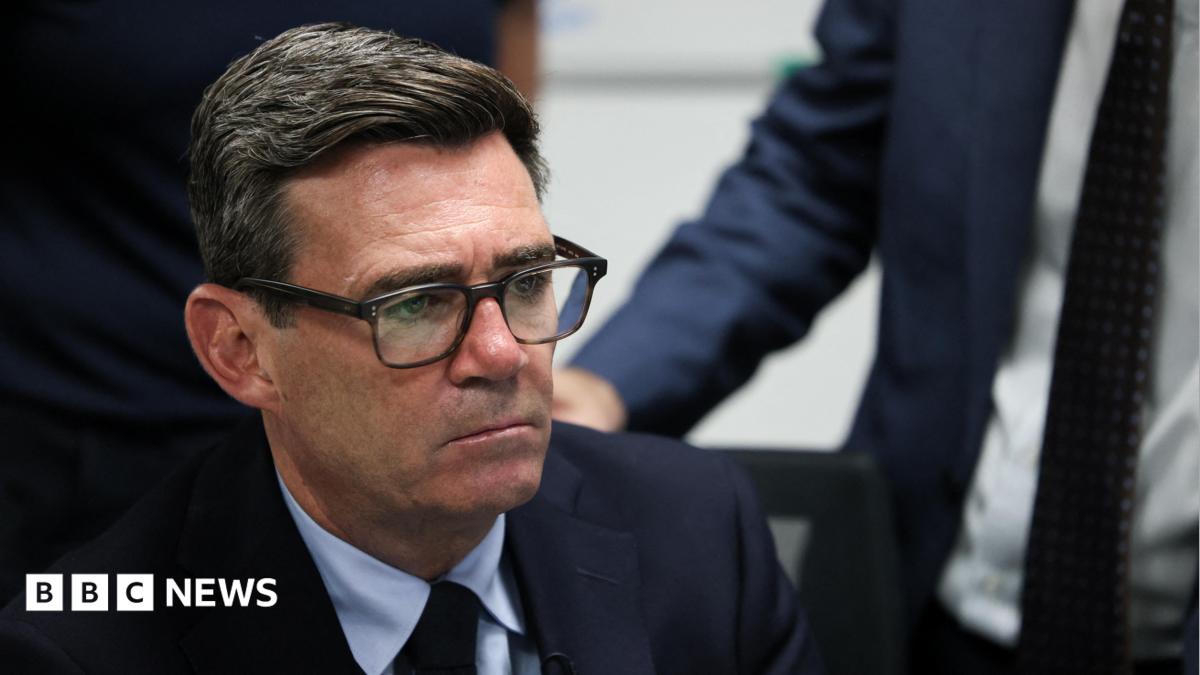
This morning, Sir Keir Starmer's cabinet is split on the most fundamental political question a government's top table of ministers can ever wrestle with: whether the prime minister should carry on.
Clearly, a cabinet split on this is unsustainable. Either cabinet ministers have to resign or be sacked, or the prime minister himself has to go.
Last night, ministers went in to see Sir Keir and he was met with a range of advice. Some said he should fight on. Some said he should set out a timetable for his departure. And others, as he weighed his options, tried to help him kick around how he might deal with the scenario he now confronts.
A dam now appears to have broken, with Labour MPs posting their public loss of confidence in the prime minister with such frequency it can be hard at times to keep count of them.
In the hours after the prime minister's crunch speech on Monday, the verdicts, public and private, began to flow.
"Just so devastatingly crap" was the pithy and rather brutal view of one Labour MP in touch with me. It was a prescient review given the torrent of public criticism from his own colleagues that was about to be begin.
Many of those MPs cannot shake a sense Sir Keir is repellent to too many voters just as Labour wrestles with how to take on Reform UK.
But there are plenty of other Labour MPs who look on in horror at the implosion they are witnessing and will be called upon to publicly defend, when they would much rather it didn't happen at all.
"A lot of us are watching this slightly aghast. With a war; an economy struggling due to Iran; market gilt movements etc. I'm still of the view that stability is a premium you give up at your peril," one told me.
How is the prime minister viewing all this? I have spoken to people who have been involved in conversations with him in recent days. They tell me that he has long been resolute about wanting to carry on, adamant that there is a genuine risk to the party and the country of a protracted leadership contest, which will deliver a successor with a "very questionable mandate" as one friend put it.
In other words, unlike Sir Keir, his successor on taking office won't have won a general election.
But it is also now true that the arithmetic and sentiment the prime minister confronts are bleak and getting darker.
"It's clearly not good," one cabinet ally who would rather this was not happening acknowledged.
And already bad blood oozes from the Labour movement. Rival leadership camps are briefing against each other. The blame game for their current mess is under way.
And now Sir Keir confronts the most awkward and painful of days – beginning with the most awkward and painful of meetings.
Tuesday morning begins with a cabinet meeting. Assembled around that famous table, Sir Keir's handpicked top team, who now disagree about how long their boss should last in his job.
It is four years ago this week that I became the BBC's Political Editor.
In those four years, I have reported on four prime ministers: Boris Johnson, Liz Truss, Rishi Sunak and Sir Keir Starmer.
To put that instability into context, I was 27 years old before I was on to the fourth prime minister of my lifetime, Gordon Brown in 2007. In the previous just over a quarter of a century, there had been just three: Margaret Thatcher, John Major and Tony Blair.
Instability and prime ministers with a short sell-by date are the new normal – and neither a big majority nor being a party that has not been in government for a while is any inoculation against that reality.