 3 months ago
139
3 months ago
139
19 minutes ago
Theo Leggett,Transport Correspondentand Jemma Crew,Business reporter

 Getty Images
Europe has "maybe 6 weeks of jet fuel left", the head of the International Energy Agency (IEA) has warned.
Stocks would reach a tipping point in June if Europe was unable to replace at least half of its imports from the Middle East, the organisation said in a report this week.
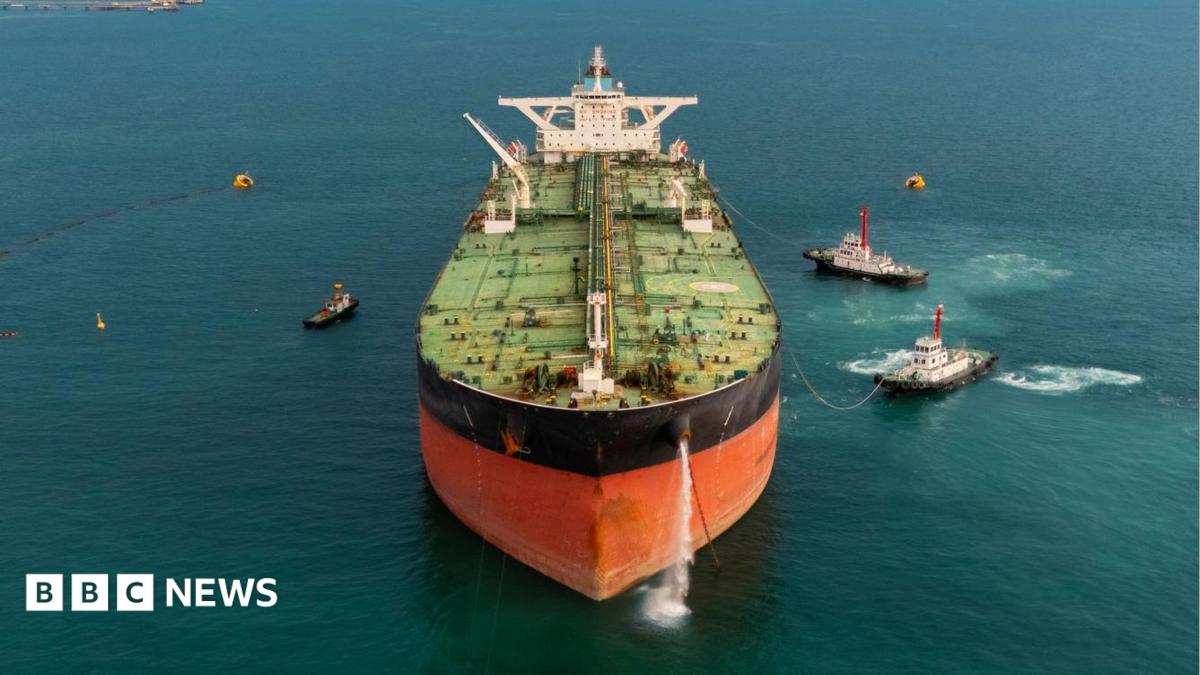
The Strait of Hormuz, a key route for jet fuel out of the Gulf, has been effectively closed by Iran for more than six weeks in response to US and Israeli attacks, sending the price rocketing and prompting fears of shortages.
IEA executive director Fatih Birol told AP there could soon be flight cancellations if supplies remained blocked.
In its monthly oil market report, the agency - which advises 32 member countries on energy supply and security - said exports from the Gulf region were the largest source of jet fuel to the global market.
Refineries in other major exporting countries, such as Korea, India and China were themselves highly dependent on crude oil imports from the Middle East.
As a result, the crisis "has thrown a proverbial wrench into the inner workings of the aviation fuel markets", it said.
In the past, Europe has relied on the Middle East for about 75% of its jet fuel imports, the IEA noted.
At the moment, European countries are scrambling to replace supplies from the Gulf with imports from elsewhere.
The IEA said there had been a rapid acceleration in US jet fuel exports in recent weeks.
However, it warned that even if these shipments were all destined for Europe, they would only replace a little over half of the lost supplies.
Analysing different scenarios, it said that if Europe was unable to replace more than 50% of its Middle Eastern imports, "physical shortages may emerge at select airports, resulting in flight cancellations, and demand destruction".
If three-quarters of supplies could be replaced, the same situation could still arise, but not until August.
"Consequently, for now, it would appear that European markets will need to work harder to attract further replacement cargoes from elsewhere if sufficient inventory is to be maintained over the summer months," it said.
Many airlines around the world have had to take emergency measures to counter the rising cost of fuel, which typically makes up 20-40% of their operating costs.
The benchmark European jet fuel price hit an all-time high of $1,838 (£1,387) per tonne at the start of April, compared with $831 before the war began.
Earlier this week, the European Commission said there was "no evidence of fuel shortages" in the European Union, but acknowledged there could be supply issues "in the near future".
A spokesperson told a press briefing crude oil supplies to EU refineries were "stable with no need for additional stock releases at present".
The Commission said oil and gas coordination groups were meeting weekly, and energy measures would be announced by the Commission president next week.
In a trading update earlier on Thursday, EasyJet said it had experienced £25m of additional fuel costs in March due to the Middle East conflict.
This was despite the airline having secured more than three-quarters of its jet fuel at a fixed price before costs rose due to the current conflict - a process known as hedging.
It said the conflict had prompted "near-term uncertainty around fuel costs and customer demand".
Additional reporting by Oliver Smith.