 2 months ago
81
2 months ago
81

 EPA
EPA
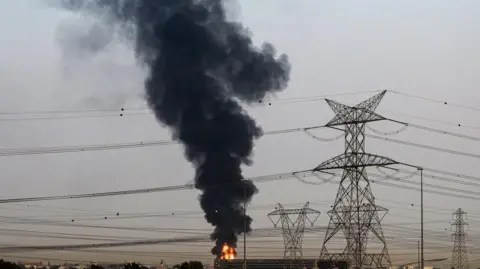
Dubai International Airport was targeted by a drone earlier in the conflict
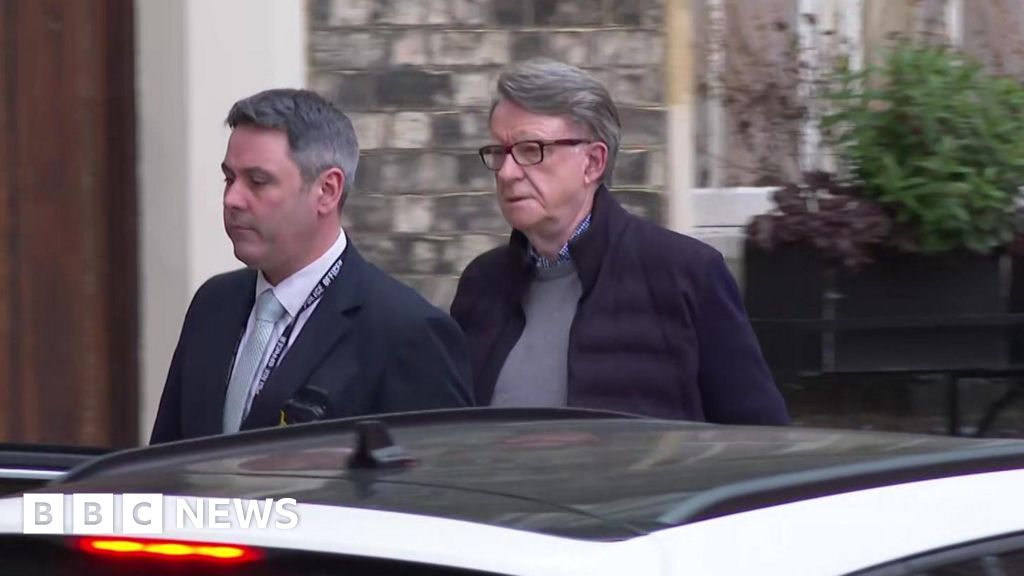
The UK government should do more to help Britons charged for filming Iranian attacks on the United Arab Emirates, a campaign group has said.
Radha Stirling, the CEO of Detained in Dubai, which provides legal assistance in the country, told the BBC she is representing four people detained in the UAE and is aware of a fifth.
It comes after a 60-year-old British man was charged last month under cyber-crime laws in Dubai, after allegedly filming Iranian missiles over the city.
The UK Foreign Office said it is providing consular assistance to "a small number of British nationals" that have been detained there, and its ambassador is talking with Emirati authorities about the cases.
Under the UAE's cyber-crime laws, photographing, sharing or posting images of sites where missiles or drones have struck is not allowed.
The BBC understands five British nationals detained over this issue are currently receiving consular assistance.
Stirling said it is "disgraceful" that more is not being done, and that some people are avoiding seeking consular assistance to deal with their detentions because they "don't feel confident" with the help the Foreign Office might offer.
"They might call a lawyer or call their family member, [or may] call someone they know in the Emirates who's got a bit of influence. They'd rather ask them to help than the embassy," she said.
Stirling said she is receiving daily notifications that people have been detained and is aware of "dozens" of cases. People being held in detention aren't necessarily being prosecuted, but also may not be released, she explained.
She argued that the UK is lagging behind other nations when it comes to offering consular services, pointing to France as an example of what can be achieved with better diplomatic pressure.
The human rights advocate said one of her clients was held in a police station with dozens of others, but reported seeing many people released hourly - many of them French nationals.
"All of these people are being arrested for exactly the same allegations," she said.
In a post on X on Monday morning, Sterling called on Dubai "to process foreigners in detention for cybercrime violations as quickly as possible".
"Slap them with a small fine if you must but free the prisoners who clearly meant no harm. Be fair and lenient with people who genuinely support the UAE. Let it be over," she wrote.
Criticism of the government is illegal in the UAE, and it exercises strict control over the flow information out of the country. Photographing, sharing or posting images of sites where missiles or drones have struck is not allowed.
Lana Nusseibeh, the UAE's minister of state to the EU, previously told the BBC that "the basis of the legislation" was put in place "in order for everyone to feel safe".
Human rights group Amnesty International has previously said the UAE has "continued to criminalise the right to freedom of expression through multiple laws and to punish actual or perceived critics of the government".
The UAE, which has long been a safe haven for foreign investment and a glamorous travel destination, has been targeted repeatedly by Iran following the outbreak of the conflict in the Middle East.
Following joint US-Israeli strikes on Iranian infrastructure, Iran has hit nations friendly to the US, targeting American army bases and energy infrastructure around the Gulf.
Some of the UAE's most iconic buildings have been damaged - including Fairmont The Palm hotel, in the luxurious Palm Jumeirah area, and the Burj Al Arab hotel.