 2 months ago
80
2 months ago
80
Malcolm PriorRural affairs producer

 NFU
NFU
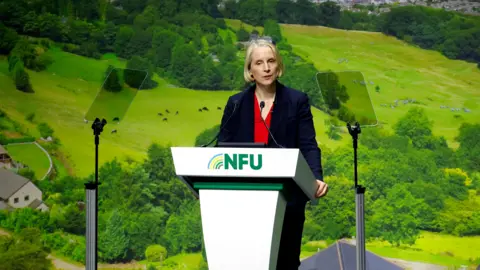
Emma Reynolds said environmental work could exist alongside food production
Farmers in England will continue to be paid for environmental work after the government confirmed details of its flagship green funding scheme, which is being relaunched after its sudden closure.
Environment Secretary Emma Reynolds told the National Farmers' Union (NFU) conference that the Sustainable Farming Incentive (SFI) - which replaced EU subsidies after Brexit - would reopen after being shut down with little warning in March 2025.
Reynolds said the new scheme would deliver both environmental benefits and boost food production.
The NFU welcomed its return, having described last year’s closure as a "shattering blow" and warning that farmers might stop doing environmental work if not paid.
 NFU
NFU
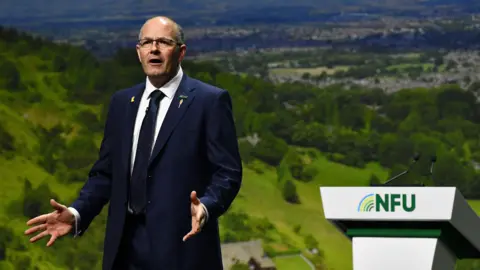
NFU president Tom Bradshaw welcomed the changes to the nature-friendly farming scheme
The SFI is the scheme through which farmers in England are paid to manage land to protect soil, restore hedgerows and boost nature recovery.
Reynolds told the conference that the new scheme would be smaller than the previous iteration, reducing the number of paid-for environmental actions to 71 from 102.
She said individual farm agreements would also be capped at £100,000, but they would be made more accessible to a wider range of farmers, especially tenant farmers.
The new scheme "weeded out" those paid-for actions that were not delivering enough for the environment or food production and that it would "support food production not undermine it", she added.
According to the Department for Environment, Food and Rural Affairs (Defra), reforms to the SFI programme have been designed to share funding more fairly, after it was assessed that one quarter of the money was going to just 4% of farms.
Payments for moorland grazing will increase and smaller farms and those without current environmental land management agreements in place will be allowed to apply first in June, with other farmers allowed to apply in September
Tom Bradshaw, president of the NFU, said the reformed SFI scheme appeared "to strike the right balance between simplifying the process and maintaining flexibility".
"What is pleasing is that Defra has taken the NFU's feedback on board in a number of areas where we were concerned about early plans for the new SFI", he added.
Tuesday's NFU conference was the first to be held since its abrupt closure, in addition to Labour's partial U-turn on farm inheritance tax proposals.
Reynolds acknowledged that recent "uncertainty" in farming had been damaging, "not just financially, but in terms of trust".
During a question and answer session with audience members, she was also quizzed about the high cost of energy facing those in the horticulture industry, and what was being done to combat fly tipping on farmers' land.
Reynolds said the illegal dumping of waste - described by one farmer as "a travesty of justice that surely must be righted" - was an issue that had been "seized" by the prime minister, with more resources being given to the Environment Agency.
George Dunn, chief executive of the Tenant Farmers' Association (TFA), said there had been "much speculation and rumour", with many fearing SFI would be "an extremely stripped back offering with much lower payment rates".
While those fears should now have been allayed, he said, there were still concerns over whether the SFI budget would still be enough to meet the demand.
Martin Lines, chief executive of the Nature Friendly Farming Network (NFFN), added that after "months of uncertainty" the government now needed to commit to "consistent, long-term funding" for green farming schemes.
Alice Groom, the RSPB's head of sustainable land use policy, welcomed the government's announcement as "a positive step" to avoid another sudden closure of the SFI scheme.
The government also announced that £120m worth of funding will also be put into research, innovation and to help farmers invest in new cutting-edge technology.
Bradshaw said the funding was recognition of the "vital contribution our nation's food producers make to the economy and to our national security".
Reynolds said she was "determined to give British farming the foundation it needs to grow".
"We want farm businesses that are productive, profitable, and resilient," she told the conference.