 3 months ago
81
3 months ago
81
Lucy WilliamsonMiddle East correspondent, Tel Aviv

 EPA
EPA
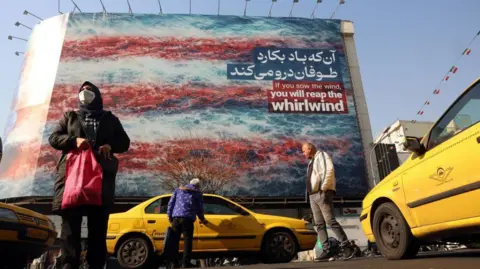
Iranian officials have warned of an "immediate and unprecedented" response to any US attack
Amid the din of global speculation over US military build-up in the Middle East, Israel's leaders have remained unusually silent.
Aside from some remarks in support of Iran's anti-government protests this month, Israel's prime minister has had little to say publicly about his superpower ally taking on his biggest enemy. His government has remained equally silent.
"It shows you the importance Netanyahu puts on this moment," said Danny Citrinowicz, who served for 25 years in Israel's Defence Intelligence, and is now senior Iran researcher at Israel's Institute for National Security Studies.
"For Netanyahu, being in this position where the US has so many forces in the Gulf, being so close to Trump attacking Iran, this is - for him - a golden moment in time that he cannot forgo."
Asaf Cohen, a former deputy director of Israel's signals intelligence unit, says there's strategy in Israel's silence too.
"The [Israeli] leadership believes we should allow the Americans to lead the way this time, because they are stronger, have more capabilities, and have much more legitimacy in the world."
Benjamin Netanyahu has long seen Iran as the key threat facing Israel, and the biggest source of instability in the Middle East. His public silence does not signal a lack of private discussion with his key US ally.
This week, Israel's military intelligence chief, Shlomi Binder, met US intelligence agencies in Washington. According to Israeli media, the discussion focused on possible targets in Iran.
 Getty Images
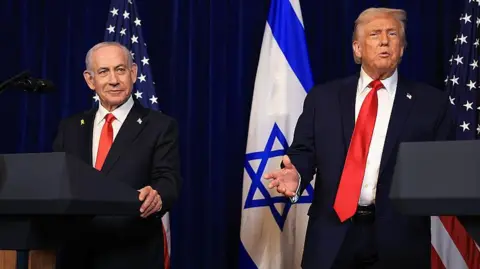
Netanyahu reportedly asked Trump to hold back in his response to Iran earlier this month
Citrinowicz believes Netanyahu is privately pushing the US towards maximalist strikes aimed at regime change in Iran, and that when Netanyahu reportedly urged Trump to hold back earlier this month, he says, it was because he viewed the planned US attack as "too small".
Netanyahu has previously urged Iranians to "stand up" to their regime, in an interview with Fox News last year.
US president Donald Trump is currently considering a range of actions against Iran – they are reported to include both limited symbolic strikes and full-blown regime change. In public, he has alternated military threats with the offer of fresh negotiations.
While many US allies are warning that trying to unseat Iran's leadership carries huge risks for the region, many in Israel see potential benefits for their security.
By changing the regime in Tehran, Israel would hope to end the threat from Iran's ballistic missiles, and the possibility that it would one day acquire nuclear weapons too.
It would also further weaken Iran's proxy militia around the region, including Hezbollah, which still has up to 25,000 missiles and rockets across the border in Lebanon according to Israel's Alma research institute.
In contrast, some Israeli lawmakers believe a limited strike, or even a new deal with Iran, could carry bigger risks for Israel's security by leaving the regime in place.
"When you deal with total evil, you don't act limited," said Moshe Tur-Paz, a member of the Yesh Atid opposition party who sits on the Defence Committee of Israel's parliament.
"There's a consensus that Israel should act much stronger and so should the Western world. When it comes to our worst enemies like Iran, there are no big differences. We all understand the threat."
Another round of conflict that left the regime intact would not be worth the price paid in Iran's retaliation, many say.
 Reuters
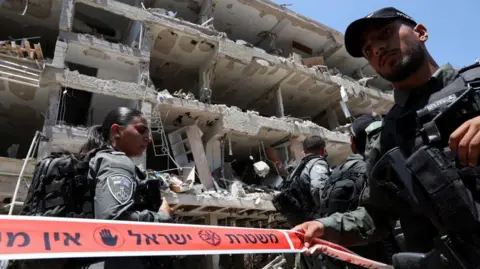
Some Iranian missiles got through Israeli air defences during the 12-day war
The Israeli military had prepared for many more casualties, but Tehran's heightened sense of vulnerability now could mean a more intense response.
And analysts have suggested that Iran learned from that conflict, adapting its tactics as the war progressed. Half a year on, Iran is rebuilding its missile stocks.
This week, a senior adviser to Iran's Supreme Leader warned on social media that Tel Aviv would be hit with an "immediate and unprecedented" response in the event of any US attack.
"Netanyahu is afraid Israel will [again] go through the pain of an attack without a change of regime," said Citrinowicz. "He came to the conclusion that to stop the missiles being built, you have to have regime change, but regime change can happen only with the US."
And this moment of intense vulnerablity for the Iranian regime – its military defences diminished after the 12-day war, its regional proxy forces weakened, and after widespread protests against its rule at home – also represents an opportunity, says Cohen.
"Iran is at its weakest now - this is an opportunity that may not come again," said Cohen. "There are a lot of people who believe this is the time - it's now or never."
In Tel Aviv, residents still living with the wreckage from Iranian missile strikes last June are speculating about another conflict.
"I hope [our leaders] don't miss this opportunity," said Neria, a young man in his early 20s.
"If it's through attack or through other means, I don't know, but certainly we should leverage the situation to switch regimes. It won't be the first time we'll deal with the bombs - it's not nice, but if it's going to help us in the longer term to feel safer here then we will have to go through it".
 Dave Bull/BBC
Poll suggest Israelis support military action against Iran
Shani, a young woman nearby, said she had mixed feelings.
"I know the Iranian people - many of them - want the US to help. I just hope that everyone will stay safe," she said. "Politicians need to think about the people. Actions have consequences."
Israeli polls repeatedly show a strong majority of Jewish residents support military action against Iran - including after the 12-day war last year.
But the risks of regime change remain. With no obvious cracks in the military and clerical alliance around Iran's Supreme Leader, Ayatollah Ali Khamenei, and a splintered opposition movement in the country, it's not clear who would take over control of Iran if the government fell.
A younger successor from the same ruling elite would not necessarily be more flexible in their response to Israel, and the chaos of a civil war would not only be deeply destabilising for Iranians, but for the region as a whole.
And several defence insiders have pointed out that regimes are not usually toppled by air-strikes alone.
Israel's prime minister, facing elections this year, has worked hard since the Hamas attacks to try and restore his broken image as Israel's "Mr Security". Regime change in Iran – or Khamanei's assassination - would be a political prize, but also a risk.
"It is a gamble, but it's a calculated one," says Citrinowicz.
"Netanyahu couldn't care less what happens the day after Khamenei. He wants to show, together with Trump, that he destroyed the Iranian regime. It's a risk he's willing to take if he knows the Americans will go all the way. The problem is Trump."
 Getty Images
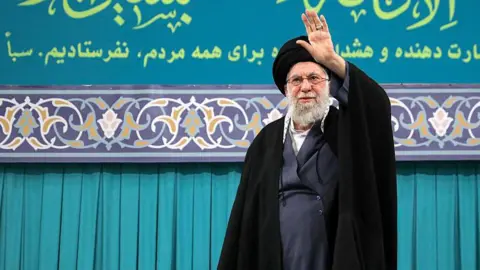
Protests in Iran have so far failed to overthrow Ayatollah Khamenei's regime
Both the US and Iran have said they are open to negotiations, but Trump has conditioned talks on ending Iran's uranium enrichment along with its support for proxies in the region, and limits on its ballistic missiles – all seen as red lines for the regime.
Israel's leadership is firmly against a deal, and Israeli analysts are divided over whether one is even achievable.
Cohen said he thought both Washington and Tehran wanted an agreement, but that if one wasn't reached soon the US would strike.
"Iran's Supreme Leader and Trump have something in common. There aren't really any red lines. During the negotiations in 2013, we used to called them 'pink lines', because they changed," said Cohen.
"We always talk about Iran as evil, but they are very rational," he said. "I think they understand that in order to change the situation, they need to do something that hasn't been done until now."
"Yes, the ability to show compromise is there, they're not North Korea, but this regime has its red lines," countered Citrinowicz, warning that a war would be hard to contain "because Iranians will think it's a war for their survival".
There are signs that Trump may be limiting his conditions for negotiations and focusing on Iran's nuclear programme. If the bar is lowered enough for Tehran to begin talks, much of the region will breathe a sigh of relief - and many in Israel will hold their breath.
Cohen says there are ways of constructing compromises on issues such as enrichment that could temporarily prevent any new activity in practice while allowing Iran to avoid an explicit ban.
"The essential difference between us and the Iranians is we like quick results, and the Iranians have great patience," he said. "They say: 'we've been here 2000 years, if we need another 30 years to get a nuclear weapon, it's ok'."