 3 months ago
106
3 months ago
106
Dominic CascianiHome and Legal Correspondent

 Reuters
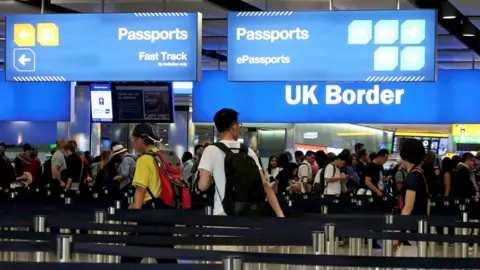
Most migrants who want to study or work in the UK must take an English test as part of their visa application
Moving English tests online for migrants who want a visa to come to the UK could open the door to fraudsters and criminal gangs, the largest international providers of English language exams have warned.
Under the new £816m contract, which could be operational by December, English exams for Home Office visas would become "fully digital" and could be sat at a location of an applicant's choosing.
In a letter to the Home Office, the largest consortium of current providers warned Home Secretary Shabana Mahmood the move risked undermining her wider goals to secure UK borders.
The letter, seen by the BBC, said there was a danger applicants would be able to fake test results with the help of imposters and AI.
The Home Office said it would not comment in detail on a live tender and was still in the process of finding a provider who would meet the highest thresholds of data security and fraud prevention.
At the moment, migrants who want to study or work in the UK need to show they can speak English to internationally recognised standards by taking tests at one of more than 1,300 test centres around the world.
But in November last year, the Home Office launched a tender for "fully remote" English tests to run for five years from December 2026 at the earliest.
It said the new system would see "customers" - meaning migrants applying for visas - choose where to take their test, providing secure conditions were met.
From January, those tests were made tougher, with migrants told they needed to demonstrate the equivalent of A-level English to be considered for a skilled work visa and other categories.
Two-thirds of the current, in-person English tests are overseen by a consortium called International English Language Testing System (IELTS).
It is comprised of the British Council, the UK's national cultural and educational organisation; Cambridge University Press and Assessments; and IDP, a large Australian education company.
In the letter, the consortium said the plans for remote English testing were "incompatible" with the home secretary's objective of improving the security, quality and integrity of the exams - and would open up "new and significant security vulnerabilities for the country".
"Given the importance of secure English language testing for the UK's immigration system and the protection of our borders, we cannot endorse the proposed approach by bidding for this tender while retaining our commitment to responsible, trusted and secure assessment," it said.
"A 'fully remote' approach exposes the UK's immigration system to weaker security and creates more opportunities for malpractice.
"We know that remote exams face cheating on an order of magnitude greater than in-person assessments."
The letter said applicants could cheat in a variety of ways, including using impersonators, working with an accomplice via screen–sharing or earpieces, or getting help from AI chatbots.
The letter added that the current system would not allow test providers to act without "sufficient security and consistency".
"This is particularly important, given the politically charged nature of the debate around migration and the need for more, not less, control and certainty over who is allowed to come to the UK."
Last August, the Australian government banned remote or at-home tests to assess the language competency of migrants.
The Home Office said the tender for the new exam system had canvassed the market to understand what capabilities was available to meet the highest standards of security - including the risk of fraud.
"Secure English Language Testing is a fundamental part of the UK's immigration system," said a spokesman.
"We are still in the process of securing a test provider who will meet the highest thresholds of data security and fraud prevention."