 15 hours ago
12
15 hours ago
12
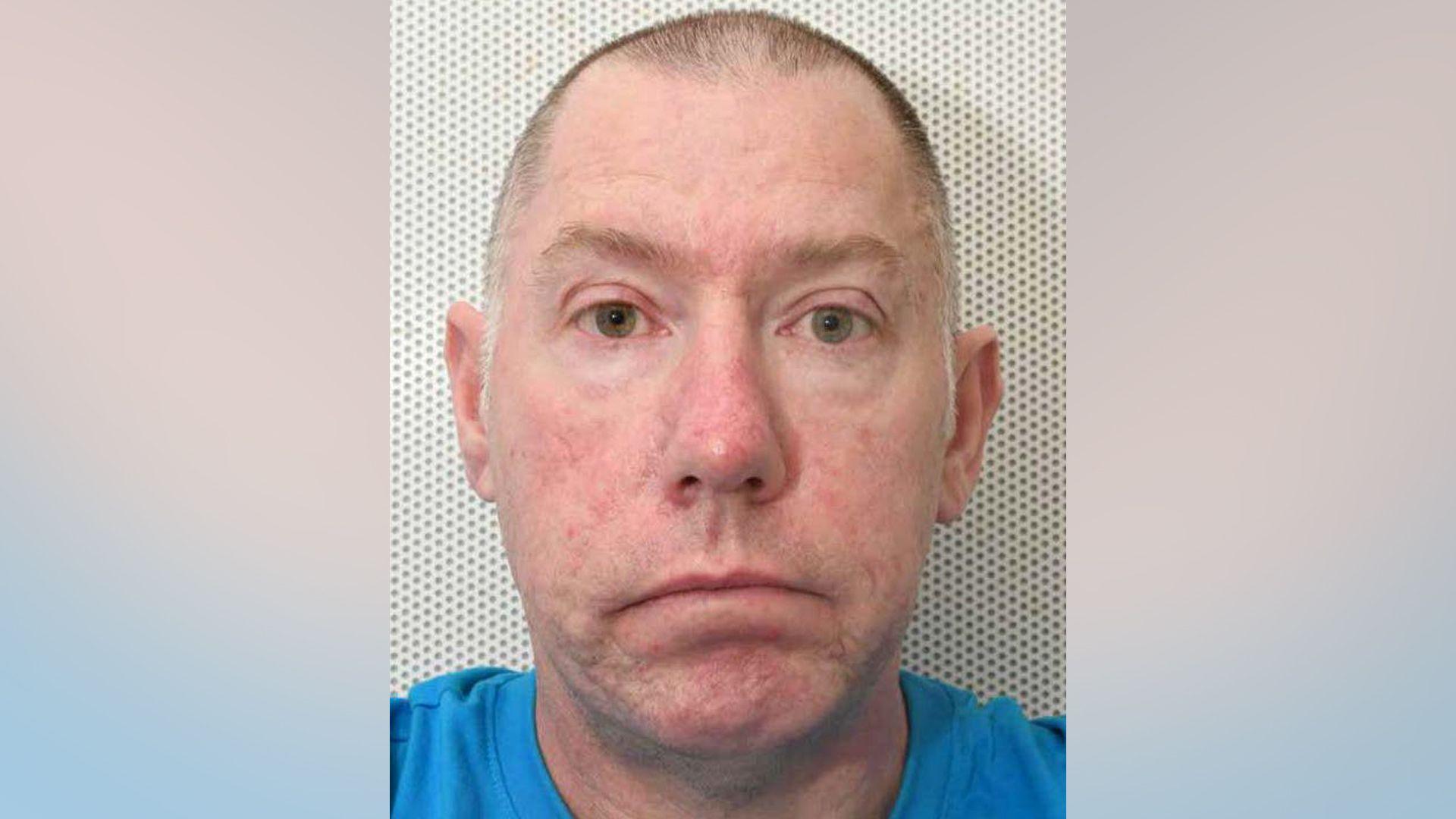 Image source, Police Scotland
Detectives have so far uncovered nine victims of PC Alan Greer
By
Scotland investigations correspondent
A police officer who took his own life in May was a violent rapist who carried out a spate of sexual attacks and attempted murders of women over at least 14 years, the BBC can reveal.
PC Alan Greer's first known victim was a woman he raped in her home in Glasgow in 2012 after she had called the police to report being the victim of a crime.
The woman reported the sex attack by Greer late last year, sparking one of Police Scotland's biggest ever anti-corruption inquiries.
Detectives have so far uncovered a further eight victims, five of whom were sex workers, attacked while Greer was off duty.
It has emerged that Greer used hundreds of prostitutes throughout his police career, and it is anticipated more victims of his violence will be identified.
Assistant Chief Constable Lynn Ratcliff, gold commander for the investigation, said what the inquiry had found was "truly shocking".
She said: "This officer has clearly abused his power and has revisited someone that he's encountered in the course of his duties.
"But this victim was brave enough to come and speak to us, and that really was the trigger point for us starting our investigation.
"That's allowed us to proactively identify eight further victims."
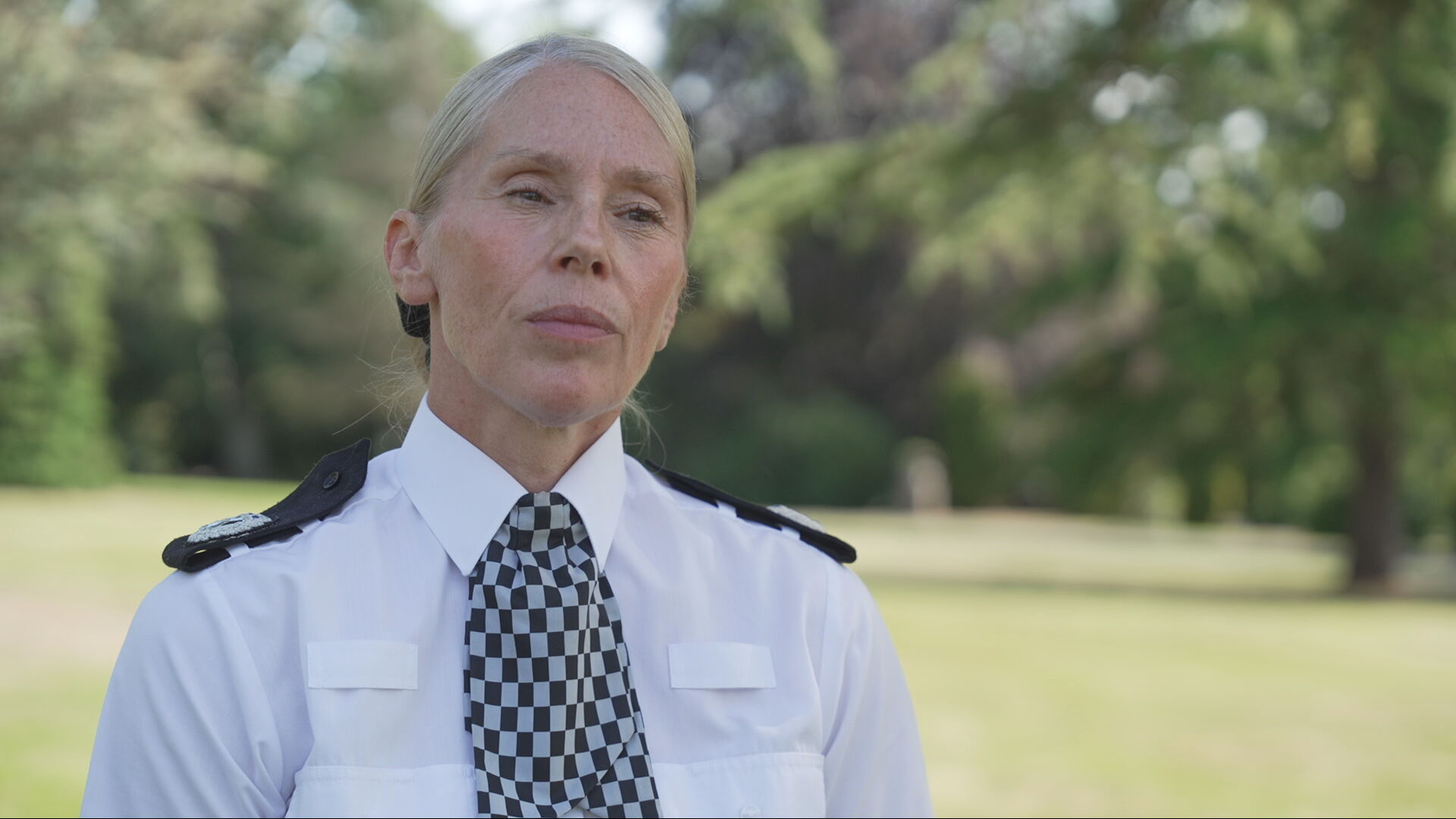
Assistant Chief Constable Lynn Ratcliff said the inquiry had been "truly shocking"
Greer, who was born in Australia in 1978, moved to the UK when he was six.
He joined Strathclyde Police in 2009 before it merged with Police Scotland in 2013 and had 17 years of apparently unblemished service.
At first, he worked as a uniformed response officer in Glasgow before he secured a job in officer safety training, based in Coatbridge, in about 2016.
This meant he was involved in teaching probationer officers as well as refreshing more experienced officer training.
When he died in May, he was 47, with a wife and child.
Greer's family and colleagues are understood to have been "oblivious" to his violent double life.
Senior officers insisted there were no opportunities to spot his offending sooner.
The woman who started the investigation
It was towards the end of last year that a woman in her late thirties walked into a Glasgow police station to report a crime.
Somewhat reluctantly, she explained that she had, in 2012, attempted to report a disturbance at her home, and that uniformed officers had attended her Glasgow home.
She said the officers took her statement and left.
A few hours later one of the officers returned, alone, forced her into a sexual act and raped her.
After she told the police last year, the woman seemed to disengage from further inquiries.
The case was handed to the anti-corruption unit (ACU), who, by April, had secured a statement from her.
From this they were then able to identify the call she'd made in 2012 and could identify the officers who had attended.
They found that, in the weeks after the 2012 attack, one of those officers had repeatedly monitored the woman's crime file on the police computer for updates, perhaps to see if she had made a further disclosure about what happened to her later that day.
The PC had even carried out one of these checks while on annual leave.
Fourteen years later as anti-corruption detectives attempted to identify the woman's attacker, it would be these keystrokes, these searches in her crime file for which there was no legitimate police reason, which gave them their suspect - PC Alan Greer.
A timeline of how Alan Greer's crimes came to light
A critical incident was then declared and a gold commander was installed.
Anti-corruption detectives started working on Greer, and obtained his mobile phone number, which had previously not been held on his personnel file.
Only his home number had been retained by police.
The mobile number was then put through police intelligence databases, which revealed a single piece of intelligence dating back to 2018, linked to that number, but with no name attached.
The intelligence had come from a Glasgow sex worker and indicated that the owner of that phone number was a customer who had been violent.
There was no indication the number belonged to a police officer, but was this an opportunity to catch Greer in 2018?
Assistant Chief Constable Lynn Ratcliff said the inquiry into Greer's offending had been "truly shocking"
ACC Ratcliff told the BBC: "I am entirely satisfied that everything that could have been reasonably done at that time was done, and that there were no missed opportunities as a result of that information."
The information from 2018 gave detectives a second strand of evidence, and grounds to monitor every keystroke that Greer made on police computers.
They then discovered that Greer had been searching the police system for traces of a complaint from a phone number, which detectives were able to identify belonged to a Glasgow sex worker.
This was a breakthrough. This was their suspect repeating the pattern from 2012.
They now had enough evidence to put before a sheriff who authorised a warrant to search his home and seize his devices.
Dawn raid on Greer's home
At dawn on 24 April, officers raided Greer's family home in what was described as a "day of executive action".
Greer appeared shocked to be arrested on suspicion of the 2012 rape.
Seven mobile phones and a laptop were seized, and Greer was brought into a police station to be fingerprinted and have his DNA taken.
He was not interviewed but was suspended from duty and released pending further enquiries.
It was only when officers started to look at his phones that the scale of Greer's offending began to emerge.
Thousands of graphic videos and images were recovered, revealing that Greer had used hundreds of prostitutes throughout his police career.
Officers are not yet even halfway through the files, but have already identified five sex workers who have been seriously sexually assaulted.
If Greer was alive, it is understood police would have sought charges of attempted murder in some of the cases, such was the level of violence used.
Three other victims have been identified, including two female police officers Greer had taken inappropriate photographs of while they were training.
As Greer's serial offending was emerging, detectives took steps to ensure his family were not in danger, and social work officers, accompanied by local police, visited his home on 5 May.
Greer died by suicide the following day.
'Police Scotland's Wayne Couzens moment'
In the days that followed, police announced Greer's death on the force's internal communications platform, and stated he died while suspended and under criminal investigation.
A source close to the investigation told the BBC: "Some of his colleagues thought this was a callous move on behalf of the police, saying he was under criminal investigation when he'd only just died.
"But it's clear they were all totally in the dark about this guy's offending.
"Folk will be in a state of shock when they learn the full truth. I don't think anyone really knows how bad it is yet.
"It feels a bit like this could be Police Scotland's Wayne Couzens moment."
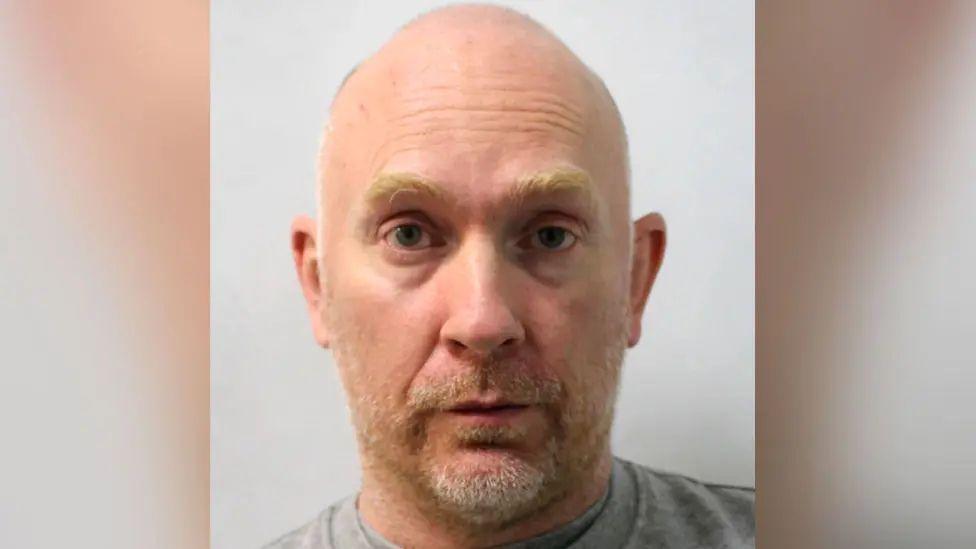 Image source, Met Police
Wayne Couzens murdered Sarah Everard after kidnapping her under the guise of an arrest
Couzens is a former Metropolitan Police officer serving a whole-life sentence for the rape and murder of Sarah Everard.
He abused his police role to stage a fake arrest, highlighting severe vetting failures and multiple failed opportunities to uncover the risk he posed.
ACC Ratcliff said the comparison was unhelpful and that no red flags were missed.
She said: "At this stage, we've got no evidence to suggest [missed red flags] is the case, but we absolutely keep that under review because one of the things that we have to do from inquiries of this nature is make sure that we capture and we take on board the lessons learned."
The assistant chief constable insisted the vetting landscape in Police Scotland is "markedly different" to when Greer joined Strathclyde Police in 2009, and that Greer would not pass vetting checks today.
There are still 1,000s of images recovered from Greer's devices that have to be sifted through, and it is understood he used multiple pseudonyms and phones to carry out his sexual transactions.
Specialist officers have been drafted in from other units to bolster the anti-corruption unit, including from the major incident team, and the inquiry is expected to take many months.
Greer will never be brought to justice but police say they are determined to establish the full picture of his offending.
ACC Ratcliff said: "If there is anyone who believes that they may have been a victim of Alan Greer, we would urge them to have the courage and confidence to come forward and tell us about it.
"They can be assured that we will listen, and that we will investigate, and we will do our best to make sure that they get the support that they need going forward."
Production/additional reporting: Kevin Anderson and Carla Basu
If you want to contact Mark about this story, email him at [email protected]
For support and information on the issues raised in this article, visit BBC Action Line.