 3 months ago
96
3 months ago
96
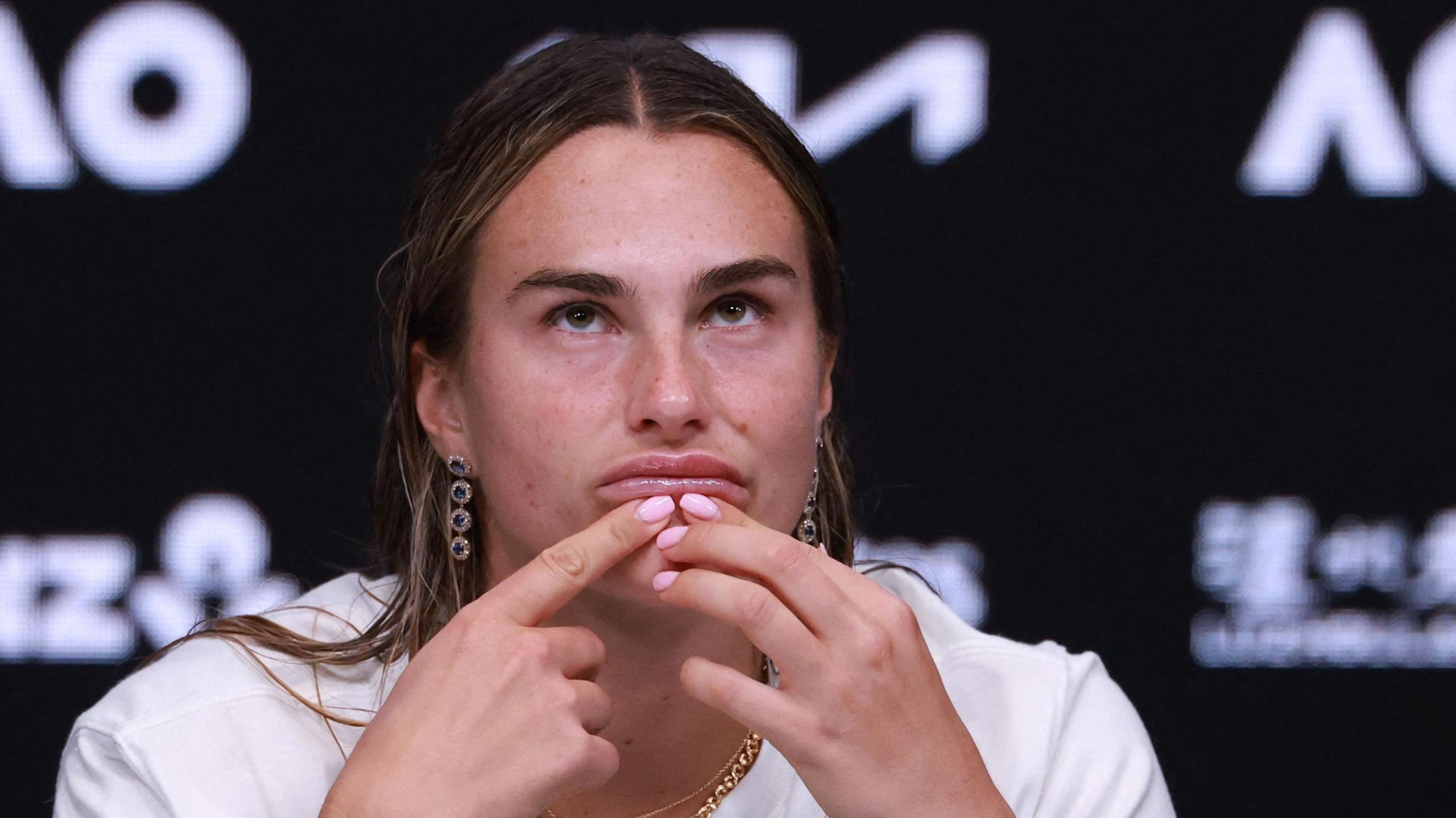 Image source, Getty Images
Aryna Sabalenka has won four and lost four of her Grand Slam finals
By
BBC Sport tennis news reporter in Melbourne
Aryna Sabalenka has been the dominant force in women's tennis for the past two seasons.
With baseline power anchoring her game, the 27-year-old Belarusian has pummelled opponents on the way to nine WTA titles and created a clear gap at the top of the world rankings.
Yet there are still questions about Sabalenka's big-game mentality - and with justifiable cause after her latest loss in a major final.
Sabalenka admirably fought back in Saturday's Australian Open showpiece against Kazakhstan's Elena Rybakina and led 3-0 in the decider, only to end up losing 4-6 6-4 4-6.
"I felt that Sabalenka really beat herself up in that final set," former British number one Annabel Croft said on BBC Radio 5 Live.
"The minute panic set in she just steamrolled in the wrong direction."
Sabalenka's four Grand Slam titles are more than most people can dream of.
But having lost four other finals, there is an inescapable feeling that the world number one is not quite fulfilling her potential on the sport's grandest stages.
Six losses in major semi-finals - including at last year's Wimbledon - also add to the noise.
"Right now I don't want to think about tennis, but my ambitions are still the same," Sabalenka said.
"Keep fighting, keep working hard, keep putting myself out there, and try my best if I'll have another chance in the final."
Sabalenka has produced a consistency at the majors that is unrivalled in the women's game.
With a style that translates across all surfaces, she has reached 13 semi-finals in her past 14 Slam appearances.
Such a record was unthinkable in her early days on tour.
At that time Sabalenka had a reputation as a player lacking the mental resilience needed to become a serial winner.
Things clicked into place before the 2023 season.
Remodelling her serve with the guidance of biomechanics expert Gavin MacMillan proved vital in cutting down on the double faults that had plagued her.
She also worked with a psychologist before realising the changes had to come from within.
Possessing a slightly calmer demeanour helped Sabalenka land her first major when she beat Rybakina in the 2023 Australian Open final.
With the pressure uncorked, she continued to play freer on her way to retaining the Melbourne title in 2024, then earned back-to-back victories at the 2024 and 2025 US Opens.
There have also been wobbles, though.
Sabalenka was the heavy favourite to beat unseeded American underdog Madison Keys and claim a third straight Melbourne title, but the instability of her second serve returned in a three-set defeat.
At the French Open she played what she described as the "worst final" of her life, hitting 70 unforced errors in windy conditions.
Her performance against Rybakina - who was bidding for a second major title after her 2022 Wimbledon win - was far from disastrous.
In fact, there had been signs she was maintaining her composure until fifth seed Rybakina broke back in the deciding set.
Out of nowhere, errors streamed from both wings as Sabalenka lost serve again for 4-3 and her focus further unravelled.
At one point she dropped her racquet and kicked it across the court in frustration.
Rybakina, meanwhile, remained ice-cool and served out with the aid of two aces for her second major title.
Asked why she felt she lost momentum in the decider, Sabalenka said: "It was great tennis from her. Maybe not so smart for me.
"Today I'm a loser, maybe tomorrow I'm a winner, maybe again a loser. Let's see."
'Sabalenka was composed then lost composure' - more analysis
Annabel Croft, former British number one, on BBC Radio 5 Live: "I think the composure Sabalenka had for most of the match got her to 3-0 in the final set.
"I felt that she had really taken her game to another level, but she couldn't keep forging ahead because there was resistance down the other end.
"Then the arms started flailing and it got a little bit immature out there.
"She wasn't handling the situation well, she was strutting around and she lost her composure completely."
Pat Cash, Australian 1987 Wimbledon champion, on BBC Radio 5 Live: "Sabalenka was very effective on the first serve in the second set, barely dropping a point when she got the return in.
"Rybakina did have some wobbles on her forehand in the semi-final, but other than that it was clean ball-striking.
"Sabalenka will go away with a lot of things to think about - she basically capitulated."