 3 months ago
136
3 months ago
136
4 hours ago
Ian Youngsand Paul Glynn,Culture reporters

 BBC
BBC
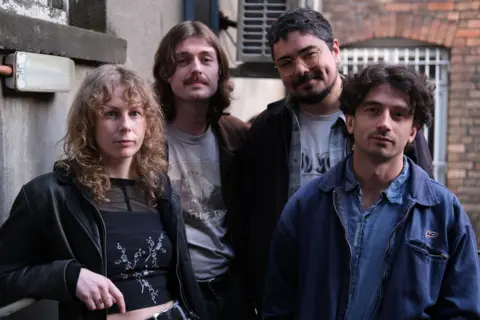
Brown Horse plan to use their funding to help pay for a UK tour in October
At the end of their gigs, up-and-coming Norwich country-rock band Brown Horse jump from the stage to their merchandise stall.
Selling T-shirts often earns them more money than the show itself.
That income is crucial to keeping them afloat on the road. Like many musicians who aren't established names, the rising cost of touring means it's "a constant struggle" to afford to keep going, they say.
"We joke about basically being travelling T-shirt salesmen," singer Patrick Turner says. "A lot of the time that's how it feels - with a soundtrack."
After a tour date, the five band members usually sleep on friends' floors or drive their 30-year-old van for hours to save on accommodation.
Following a show in Oxford last week, they arrived back in Norwich at 3.30am before starting their day jobs the next morning, then went back on the road a few days later.
"In order to break even, you have to make a lot of sacrifices for your wellbeing and comfort - which we do - and all the bands we know do, and it's just culturally accepted that that's what you have to do," Brown Horse bassist Emma Tovell says.
Their next UK tour in October will be slightly easier, however.
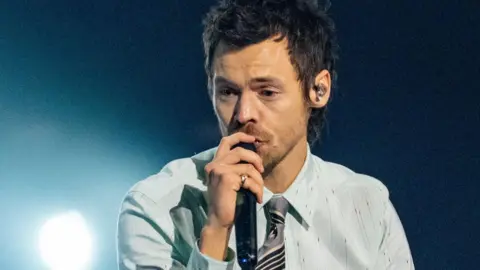
A £1 levy has been added to tickets for recent arena and stadium shows by stars including Harry Styles, Olivia Dean, Lily Allen, Take That, Foo Fighters, Florence and the Machine, Lorde and My Chemical Romance.
 Getty Images
Harry Styles' run of 12 Wembley Stadium shows this summer could raise a large sum for the Live Trust
That has raised £5m for UK-based charity the Live Trust. The first £500,000 of that is now being distributed - £125,000 for musicians and the other £375,000 for grassroots venues, promoters, festivals and producers.
Brown Horse have been given almost £5,000 from the fund.
They are among 26 bands, singers and rappers who have been chosen to share the first instalment of cash.
The band, whose third album was recently described as "stellar" in a 9/10 review by Uncut, say they will use the grant to pay for accommodation, keep their ticket prices affordable, and pay themselves for the first time in a year.
"We talk to our friends in bands a lot, and it is a constant struggle to make the decision to keep sacrificing aspects of your life and wellbeing to keep going," Tovell says.
"There's a lot of money at the top and basically nothing at the bottom, so we're really grateful that those people have been willing to engage in [the fund], and hopefully it'll be a fruitful thing for the whole music scene if this can keep going."
Blur drummer David Rowntree, chair of the Featured Artist Coalition (FAC), which is distributing a share of the Live Trust fund to musicians, says the combination of Brexit, Covid and the cost of living crisis has contributed to a "cost of touring crisis".
"Things have conspired against grassroot artists," he tells BBC News, "and without grassroots artists, there are no big artists."
New bands have found it increasingly difficult to build audiences and sustain careers in recent years, he warns.
"It's virtually impossible now to make touring pay for itself. So either artists aren't able to tour, which is terminal for their careers, or if they do they have to cut back on something else," he says.
 Getty Images
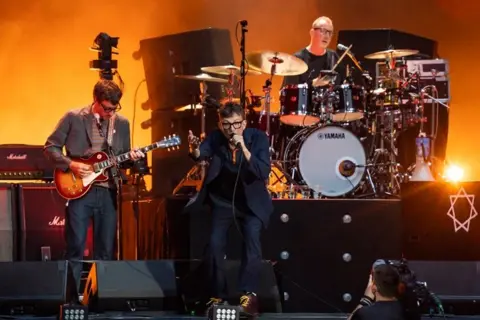
Drummer Dave Rowntree performing with Blur at Wembley Stadium in 2023
Blur started out playing in "small venues to a small number of people" in the late 1980s and early 90s, before becoming stadium-fillers.
"I do wonder whether if a band like us started now, if it would actually be able to get anywhere," Rowntree adds.
Other acts to receive money from the first pot from the FAC's UK Artist Touring Fund include Southampton rapper VIC, London soul singer Ego Ella May, and Manchester psych noise group Wax Head.
West London reggae artist Hollie Cook has received about £5,000 to help cover the estimated £5,500 loss she would have made on her current tour - thanks to band fees, travel and accommodation.
"As exciting and fulfilling as touring can be, the financial element of it has become really quite stressful," she says.
Cook was a teenager when she was asked to join reformed punk band The Slits as a backing vocalist back in 2005, just as the dawn of the digital age was eroding earnings from recorded music.
She's noticed that since Covid it has become increasingly difficult to get audiences back into medium-sized venues and sell tickets in advance.
She says that makes it hard to plan a show that feels "worthy enough of showcasing my records in the most high quality way possible".
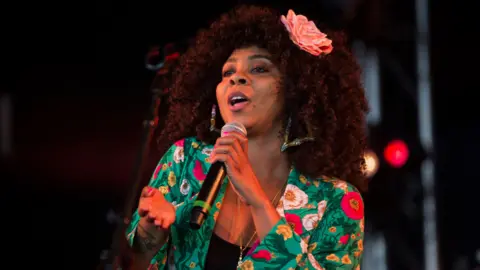
BBC Biggest Weekend performer Hollie Cook released a dub version of her last album Shy Girl for the recent Record Store Day
The extra £1 on ticket prices has government backing, but not everyone in the music industry is on board.
It is currently voluntary and fewer than a third of arena and stadium concerts took part, according to the last figure given by the Live Trust in December.
Ministers have pledged to make it a legal requirement if it isn't more widely adopted.
Other projects being funded include schemes to improve the running of small venues and provide equipment, renewable energy and accommodation, administered by the Music Venue Trust.
For Elephant Sessions, a four-piece from the Scottish Highlands who blend traditional Celtic music with upbeat funk and electronica, the money will help to cover rising touring costs including van hire, fuel, accommodation and merchandise.
It will also let them take the "risk" of playing venues "off the beaten track", Mandolin player Alasdair Taylor says.
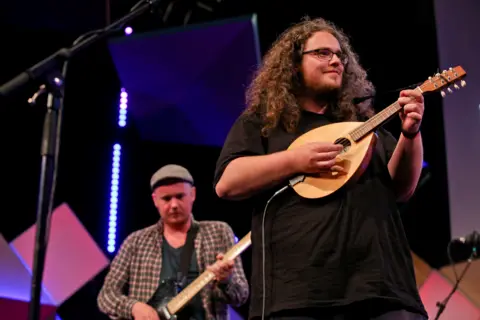
Elephant Sessions' record For the Night won album of the year at the 2022 BBC Trad Music Awards
Their next tour will take in places like Stromness in Orkney, Carlisle and Settle. "The overheads are still high but your potential earnings are, of course, lower," he notes of staging a tour outside the UK's major cities.
Taylor emphasises the importance of live music as a form of escapism. "Punters don't have the expendable income they once had," he says. "Being able to go to a gig on a Wednesday night, and buy a more expensive gig ticket than it used to be, a T-shirt or a vinyl, a couple of drinks, maybe a taxi fare, is going to cost you a hell of a lot more now than it ever cost you."
With that in mind, he says his band want their audiences to "jump around, make noise and just have a big night".
"Enjoy yourself - because there's lots of things to not enjoy right now."