 3 months ago
107
3 months ago
107
4 hours ago
Archie MitchellBusiness reporter

 Getty Images
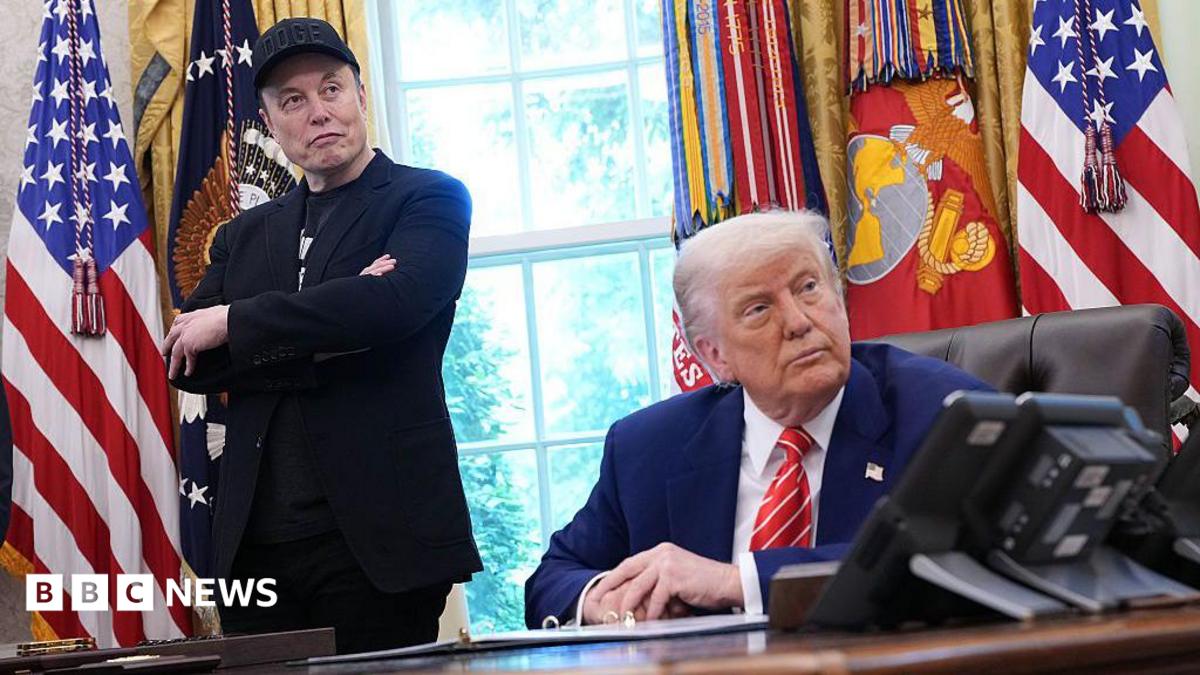
Donald Trump once predicted the US-Israeli war in Iran would last no longer than six weeks. It has now entered its third month.
The conflict has caused a global energy shock on a par with the oil crises of the 1970s, driving up prices of everything from fuel to groceries.
Despite piling additional pressure on already hard-pressed Americans, the latest GDP figures out this week showed the economy motoring along in the first three months of 2026.
As America's first quarter growth figures offered a boost, the BBC examines how major US economic indicators are looking for the president, with midterm elections looming in November and no sign of the ongoing war coming to an end.
In the run-up to the midterms, Trump will use Thursday's growth figures to paint his economic approach as the right one.
The economy grew by 2% on an annualised basis in the first quarter of 2026, a significant boost after a slowdown at the end of 2025, official statistics showed.
That came despite pressure on consumers from US tariffs, which led to higher prices for American shoppers, and the fresh energy shock sparked by the Iran war.
Economists said the hit to consumers was not as bad as feared, with consumption growing by 1.6% on an annualised basis. But they also attributed the overall increase in growth to the huge sums being spent by tech giants investing in the rollout of artificial intelligence (AI).
James Knightley, chief international economist at ING, said that as consumer spending cools, "investment linked to tech and AI has clearly become the main engine of growth in the US".
'It's just ridiculous': Americans react to fuel prices
November's elections are on a knife edge, and the success of Trump's Republican party will depend largely on the now familiar political line: "It's the economy, stupid."
But while headline growth figures are positive, Americans are much more likely to vote based on the cost of living.
Trump's strikes on Iran, and the subsequent closure of the Strait of Hormuz, have driven oil prices up, with a barrel of Brent crude, a major oil benchmark, hitting a four-year high of $126 on Thursday. It has since fallen back to $111 but it was trading at around $73 before the war broke out at the end of February.
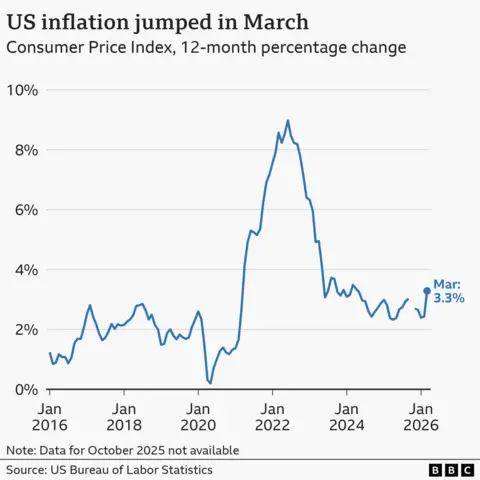
The impact of the Iran war, in particular March's inflation figures, dashed any hope of an imminent interest rate cut by the Federal Reserve.
The central bank kept its base rate, which affects mortgage and other borrowing costs for Americans, at the 3.5% to 3.75% level on Wednesday. Before the war, economists had expected a series of interest rate cuts.
Since US strikes on Iran began, the average interest rate for a 30-year mortgage has risen from 5.98% to 6.3%, according to data from Freddie Mac.
Samuel Tombs, chief US economist at Pantheon Macroeconomics, has said higher oil prices and expectations the US will maintain its blockade of Iranian ports for the long haul, could see rate cuts delayed until 2027.
Despite the turmoil, Americans with money in the stock market have fared well during the war.
The major US indices - the S&P 500, the Dow Jones Industrial Average and the Nasdaq Composite - have all more than made back losses seen in the early days of the campaign, and have continued their pre-war upward trajectory.
The Nasdaq has gained around 10% since the start of the conflict, the S&P is around 5% higher while the Dow has risen by just over 1%.
Increases in the major indices are good news for investors, but also a boost to those with pension pots tied up in stocks, such as 401ks.
With the Republicans on course to lose control of the House and at risk of losing the Senate, November's elections will depend massively on the state of the economy by the time voters head to the polls.
While headline GDP growth and stock markets rallying will offer some comfort to Republican strategists, the spiralling cost of living will continue to be a cause for concern.
How much Trump can or cannot do in the time he has remaining as president will be influenced in large part by how the conflict in Iran plays out, whether the Strait of Hormuz is reopened and whether this feeds through to lower fuel and grocery prices for American voters.