 2 months ago
98
2 months ago
98

 Getty Images
The day after Vicky Levens had her third miscarriage, she returned to her job as a receptionist.
Back at work, two managers, whom she says knew about what she'd been through, made comments she found hurtful.
"At least" Vicky was early on in her pregnancy when she miscarried a female manager told her, while a male manager said she didn't look presentable enough to work at the reception desk.
"I was in shock," says Vicky, 29, from Belfast. She handed in her notice on her next shift.
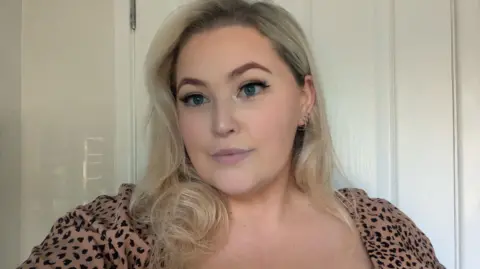 Vicky Levens
Vicky says misplaced advice about her fertility and future can be hurtful
Over the years, friends and family have made misguided but well-meaning comments to Vicky about her struggle to conceive, telling her "it'll be your turn soon", "just hold on to hope", or even offering her advice.
"I know they're trying to bring comfort," says Vicky, who started trying for a baby in 2020. "But, in the moment, when you're going through the motions, I wish people wouldn't say that, because it hurts."
Vicky is not alone in facing uncomfortable comments about miscarriage and fertility struggles.
"You are met with really poor words from people," Kay, 33, from Manchester, told Woman's Hour's Guide to Life in an episode about navigating conversations around infertility. The vast majority of ill-judged comments aren't intentional, she says, but they can come across as insensitive.
"Someone really close to me sat me down just before I started IVF and said to me 'a lot of women have miscarriages, so you just need to get ready and not be dramatic about it'," Kay recalls.
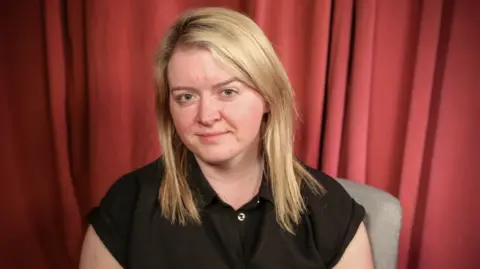
Kay says people have unintentionally made hurtful comments about her infertility
According to the NHS, around one in seven couples have difficulty conceiving. In the UK, in 2023, more than 50,000 patients had IVF cycles - where eggs are fertilised in a lab and the embryo is then placed in the woman's uterus.
But people who've experienced infertility say it can be a difficult subject to discuss with friends, family and colleagues.
"I think it's quite a taboo subject," says Chloe Cavanagh, 26, from Glasgow, who is on the NHS waiting list for IVF.
Initially Chloe was hesitant to tell friends and family that she was being affected by infertility.
"There's a sense of embarrassment," she says, "because that is what your body's meant to do so you feel like you're failing yourself."
'You're questioned about being womanly enough'
Asiya Dawood, 42, who's British-Pakistani and lives in West London, says in some South Asian communities, women who don't conceive quickly after marriage "get so many comments".
"You're questioned about being womanly enough," Asiya says, adding that relatives can be quick to blame the wife for focusing on her career or not getting married young enough.
When she was struggling to conceive, Asiya withdrew from friends and family because she was tired of the relentless comments. "I didn't go out, I didn't have a social life," she says.
Asking for help is "taboo" and might be perceived as a "sign of weakness", she adds.
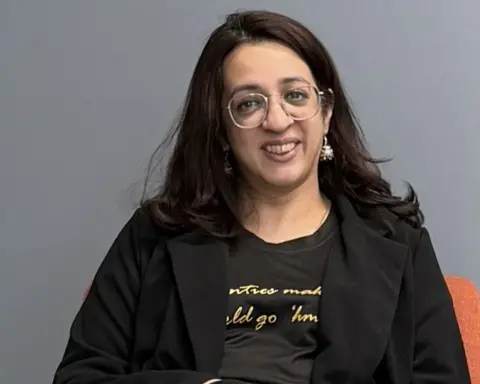 Asiya Dawood
Asiya Dawood launched the first South Asian Baby Loss Awareness Week last year
But it's important to open up to people about your experiences because infertility and the treatment for it can have a big effect on emotions, says Joyce Harper, Prof of reproductive science at University College London (UCL).
"The treatment itself is a roller coaster, and then the days when you get that period or you've had your embryo transfer back; there are so many times when it becomes really difficult," she told Woman's Hour.
 ikat photography / Sam Chandler
Marie Prince and Joyce Harper spoke to Woman's Hour about the importance of having a support network when you're experiencing infertility
The people you confide in don't necessarily need to be family or the friends you'd usually share things with, says Dr Marie Prince, a clinical psychologist who specialises in fertility.
"It might be that your IVF support team are different to the people who would normally support you," she says.
People going through fertility treatment at a UK clinic (including NHS clinics) have access to counsellors, Prince says, and she encourages everyone to use that service.
The women BBC News spoke to say friends and family should ask the person experiencing infertility what kind of support they need, as this varies from person to person.
Random check-ins, remembering dates of appointments and educating yourself on treatments can show that you're thinking of the person, Chloe says.
'Incredible' support from friends and family
Elena Morris, 29, from South Wales, says she's had "incredible" support from friends and family throughout her fertility journey.
After having miscarriages, people visited Elena, brought her food and flowers, and gifted her and her husband vouchers for restaurants "to just have a break". Her parents and husband bought her flowers for Mother's Day, too.
But it's not just the big gestures. Elena says small signs of support also mean a lot, such as people texting her saying they're thinking of her.
"It's just nice to know that you haven't been forgotten."
 Chloe Cavanagh / Elena Morris
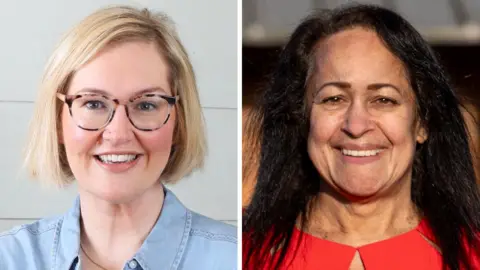
Chloe Cavanagh and Elena Morris say small gestures like check-in texts can show people you're thinking about them
When a friend or relative becomes pregnant, this can stir strong emotions for someone experiencing infertility. Prince says she's spoken to people who feel "really distressed" over loved ones' pregnancy announcements.
Elena has told her friends and family she wants them to share their pregnancy announcements with her via text, so that it's "easier to digest and you can respond when you're ready".
She says being told in person can make some people feel like they've "got to be really really happy" even though "actually, all you might want to do in that moment is burst into tears".
When one of Chloe's closest friends became pregnant, she appreciated being told one-to-one, rather than finding out in a group setting or through another person.
"I would hate for people not to tell me because they think I'm going to be sad," Chloe adds.
Within South Asian communities, Asiya says younger people are keen to break the stigma associated with infertility and miscarriages.
To encourage people to share their experiences, she launched the first South Asian Baby Loss Awareness Week last year, with talks from women, GPs and charities.
For Elena speaking to friends and family about her experience with infertility "felt like a relief".
"When people don't know what you are going through, things can be said or done unintentionally that may trigger you," Elena says. "We are absolutely glad we opened up and wouldn't change it."
If you have been affected by the issues raised in this story, organisations that can offer help and support are available on the BBC's Action Line