 2 months ago
54
2 months ago
54
Archie Mitchell,Business reporterand Kris Bramwell,BBC News

 BBC
BBC
Chancellor Rachel Reeves has given her latest update on how the economy is expected to fare over the next few years.
The Spring Statement may feel distant from your everyday life, but if the economy grows that should mean higher pay and more job opportunities.
BBC Your Voice has spoken to people in their 20s and 30s to find out how they are currently faring financially and how they feel about their future prospects.
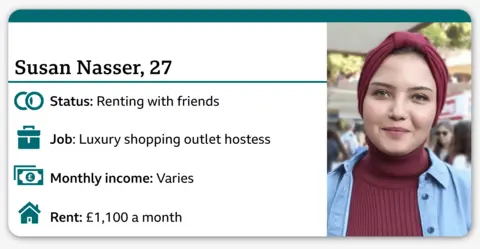
Susan Nasser works as a hostess, welcoming shoppers at the luxury Bicester Village outlet shopping centre and helping them find their way around. She is also hired by brands when they have pop-up shops in different locations, handing out products.
The 27-year-old is employed on a zero-hours basis, meaning her income can fluctuate wildly. Some months she makes as little as £800, while others see her take home £2,000.
She rents a flat with friends in Roehampton, south-west London, which costs her £1,100 per month, so her varied income poses a challenge.
"You get the money, [but] there's no consistency," she told the BBC, adding that employers can cancel either some or all of her work at the drop of a hat.
Nasser initially enjoyed the flexibility of zero-hours work, which she took on alongside a full-time job at a financial services firm, but now says she feels "stuck in a cycle".
She says she hopes the government goes through with the Employment Rights Act, which will offer workers guaranteed hours from 2027.
'I earn £31,500 and have bought my first house'
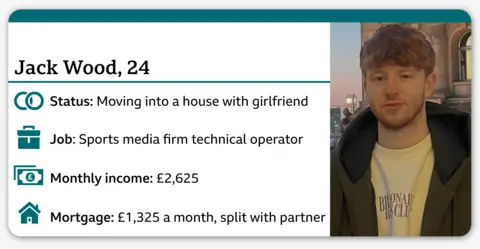
Jack Wood, 24, is a technical operator for a sports media company in Salford. He says lower interest rates helped him and his girlfriend buy their first house.
Since Labour came to power, the Bank's interest rate, which affects borrowing costs such as mortgage rates, has fallen from 5.25% to 3.75%.
The Bank is independent from government, but Reeves has claimed the rate cuts have been possible due to Labour "restoring stability".
"I feel like it has come a lot sooner than I expected to buy a house," says Wood.
He says he was helped by the ability to live at home, paying between £100 and £200 in rent each month from his £31,500 salary.
Having piled the maximum amount into a Lifetime Isa, he says he was forced to survive on Pot Noodles some weeks to avoid being hit by the withdrawal penalty, an element of the product that has proved controversial.
'I work in a restaurant. The £15,000 pay isn't worth the stress'
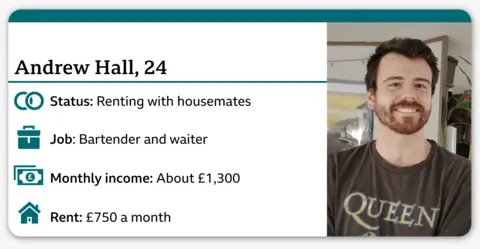
Andrew Hall, 24, works as a bartender and waiter at a restaurant in Guildford, Surrey, and says he struggles to make ends meet each month.
His contract is for eight hours, though he typically works 30–50 hours a week. But he says his shifts can be delayed or cancelled at very short notice.
"I once did a shift from 3pm to 2am and was due in at 10am for my next shift.
"At three minutes to 10am, I got a call asking me to start an hour later because it was quiet. I'd walked half an hour to get there and my six-hour shift was becoming a five-hour shift," he says.
Hall lives in a shared house and his rent has gone up from £600 to £750 per month in the last three years. In the past, he has turned to payday apps which allow him to collect his wages early.
He was able to save around £2,000 last year, though he has already had to spend half of it to make up for a lack of available hours this January.
While he had originally wanted to climb the ladder in hospitality, he has now "given up" on the industry as he believes it is not worth the stress. He now plans to apply for a place at university "to progress myself that way".
'I receive £1,900 a month in benefits but I'd rather be working'
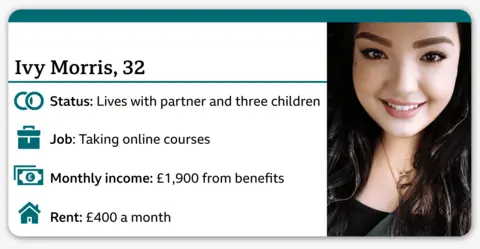
Ivy Morris, a 32-year-old mother of three from Hinckley, Leicestershire, receives the personal independence payment for a range of disabilities that affect her mobility, as well as universal credit. She lives with her partner, who is also her full-time carer.
Her benefit payments total around £1,500 each month, after her £400 rent is taken out, and she expects them to rise by around £70 when the two-child benefit cap is lifted — a move she welcomes from the government.
But despite the increase, she says she will still be reliant on her local food bank.
Morris, who used to work as a waitress but had to stop due to her mobility issues, is currently undertaking online learning courses. She says she would rather be out of the house working, but feels "caught in a benefits trap".
"I'd absolutely rather be out there working, but it's not feasible with having to afford childcare," she said.
'I was made redundant from my apprenticeship'
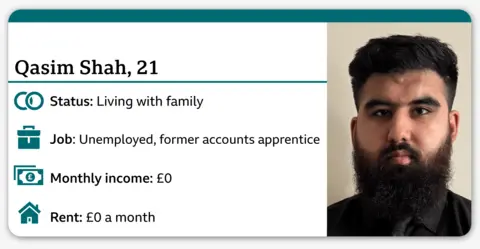
Qasim Shah, from Birmingham, was recently made redundant during a Level 3 apprenticeship as an accounts assistant at a telecommunications firm. He is still studying for the qualification aspect of the apprenticeship and will sit exams later this year.
The 21-year-old lives at home with his parents and worked in his family's small supermarket before he started his apprenticeship.
He previously wanted to progress through to completing a Level 7 apprenticeship, the equivalent of a master's degree, but says the government's decision to cut public funding to those on the scheme aged 22 and over has led to a change of plans.
Shah would like the government to do more to encourage school leavers into apprenticeships — something the prime minister announced as a priority at last year's Labour conference — and to increase the availability of apprenticeships.
Additional reporting by Emer Moreau