 2 months ago
148
2 months ago
148

 BBC
BBC
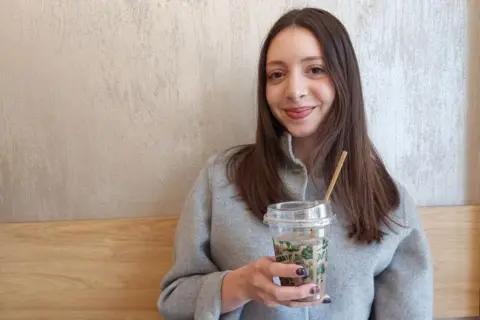
Ana likes matcha but she also drinks alternatives like hojicha
Browsing through the menu in a London cafe, Ana Costa wasn't sure what drink she was in the mood for. She didn't fancy a coffee and was considering a matcha latte, when hojicha caught her eye.
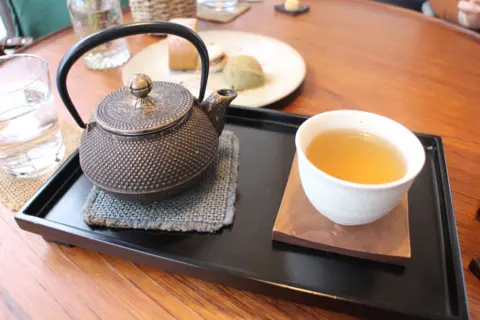
A Japanese drink made from green tea, hojicha is dry-roasted at high temperatures to produce a distinctive aroma and nutty flavour. It's less bitter than green tea, with a low caffeine content - and it's creeping onto café menus.
Hojicha tea has always been on the menu, in its traditional form, at chef Shuko Oda's Koya restaurant in London.
"Traditionally, we don't put milk or any sugar or sweetenings in with hojicha," Oda says. "It's meant to be a brown, clear tea that is very much an every and any time of the day type of hot drink."
But Oda says she's seeing the drink pop up more and more across the UK, largely in milky hojicha lattes and desserts, and even added hojicha ice cream to her own restaurant's menu earlier this year.
 Getty Images
Considered an everyday beverage in Japan, hojicha is often served with meals or as a comforting drink for children and the elderly
At matcha chain Jenki, iced hojicha latte sales were 55% higher across its six London cafes between January and April than during the same time period the previous year.
Meanwhile Rashique Siddique, director of How Matcha, says hojicha latte sales have "grown significantly" over the past year, with How Matcha now selling one or two cups for every five matcha lattes it sells.
"Hojicha feels like where matcha was two or three years ago," Siddique says, "it's moving from niche to mainstream quite quickly."
The tea even hit the menu for the first time at east London coffee roasters Grind this summer, in the form of a black sesame hojicha. Head of coffee Howey Gill says it added the drink after keeping an eye on Japanese food and drink trends spreading to the UK - though he acknowledges the brown colour is "not as sexy as matcha".
Ana, 21, says her hojicha latte from How Matcha - served iced with oat milk and a pump of vanilla syrup - is definitely "less Instagrammable" than matcha, but she enjoys the flavour and says the appearance doesn't matter to her.
 Getty Images
Matcha hype is showing no signs of slowing
Shoppers carrying cups of bright green matcha have become ubiquitous in town centres across the UK. As of February, even Greggs is selling it.
And increasing numbers of people are buying the powder to prepare at home, too.
The quantity of powdered matcha sold at UK supermarkets and convenience stores has grown more than fourfold over the past year, with shoppers spending nearly £9m on it over the last 12 months, according to data from research company Nielsen IQ.
Sipping matchas in the sun, Anjani, 28, says she feels the drink is still "very trendy". Her friend Abeer, 28, agrees, but adds that she thinks the majority of people drink it "for the vibes" rather than because they like the flavour.
Mike Turner, founder of speciality tea shop Bird & Blend, says matcha sales are "sustaining pretty well" and that he expects the market to continue growing, but thinks the hype could die down as the novelty wears off.
 Getty Images
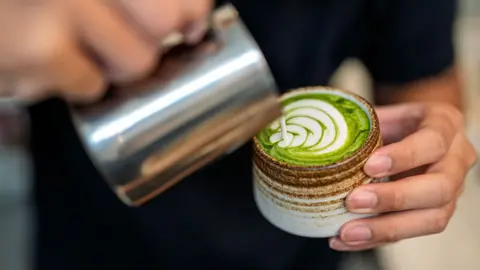
Barista-made matcha lattes remain popular - but UK shoppers are increasingly buying matcha powder to make their own drinks at home
Drinking her hojicha, Ana says she likes the taste of matcha and drinks it twice a week, but feels that a lot of UK coffee shops have "warped" it to make it trendy with too many syrups and flavourings.
"The drinks become less about the quality and taste of the matcha" and more about highlighting unique flavour combinations, she says. "You often aren't able to actually taste the matcha."
Isabel MacNeaney, 23, a barista in a Japanese cafe in London, agrees. She says some of her customers change their mind about buying a drink when they discover the cafe doesn't serve matcha with syrups or sweeteners, or complain it tastes too bitter.
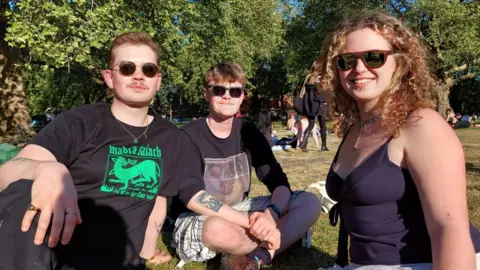
Barista Isabel (right) says she thinks some customers don't like the taste of matcha, while her friend Adam (left) reckons mate, from South America, is going to be the next tea craze
"Some people truly do like matcha," Isabel says, "but for a lot of people it's trendy and they can hide the taste with syrups so they can still have a pretty drink."
But for others - regardless of how eye-catching or how many syrups have been added, they will never enjoy the taste of matcha.
"I've tried to like it. It's gross," says Liv Dyer, 31, who'd much rather have a coffee, English breakfast tea or green tea. "It tastes like a muddy puddle."

Liv (left) and her friend Annie have tried matcha but just don't like how it tastes
Matcha mania may have been sweeping the world, but Nielsen IQ data shows sales of other types of tea - including green tea, kombucha and cold carbonated tea - are all rising, too.
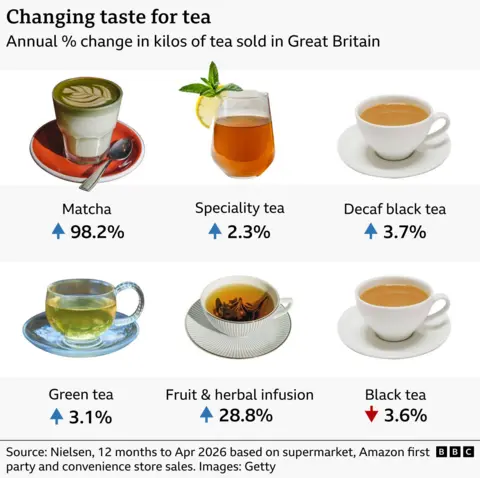
Twinings, for example, branched out into selling sparkling fruity tea in cans in 2024, while kombucha is now available in some supermarket meal deals.
At Bird & Blend, black tea - which includes flavours like chocolate digestive and violet cream - is lined up alongside rooibos, chai, matcha and other teas. Annual sales of chai grew 38% in the year to April.
"I have been saying chai will be the next thing for a few years," says Bird & Blend's Turner, but he adds, "I don't think it will explode to the same extent that matcha has."
A sweeter, milder western version in the form of a chai latte already features on the menu of most major coffee chains, but there's growing interest in karak chai, a sweet, milky Indian tea spiced with ginger, cardamom and cinnamon, according to Chaiiwala founder Sohail Alimohamed.
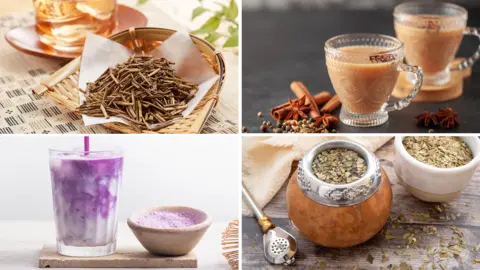
Clockwise from left hojicha, karak chai - made with more spices than a chai latte, mate, and ube - which is appearing on more menus lately
Chaiiwala, which sells Indian street food and hot and iced drinks, sells around half a million cups of karak chai every month.
Its cafes are open late - some beyond midnight at the weekend - and Alimohamed says in recent months he's been contacted by universities interested in opening stores on their campuses for students who don't drink alcohol.
This is in part why friends Anjani and Abeer tell me they enjoy matcha and chai cafes so much.
Neither like coffee, and both say going to cafes with a wide range of other hot - or iced - drinks offers a great alternative to socialising at the pub.
Vibrantly-coloured drinks made with ube, or purple yam, have also been added to Costa Coffee and Starbucks menus this summer, with marketing materials heavily promoting ube's lilac hues.
But on a sunny Spring day when I ask people in a London park what tea trends they've got their eyes on, it's not ube that keeps coming up - it's mate.
A bitter, caffeinated tea from South America, it's traditionally served hot with a straw, but is also available chilled.
"I think mate is gonna be the next thing," says Adam Leahy, 23, highlighting its taste and high caffeine content.
Despite Adam's prediction, there's no knowing for sure what the next big trend will be, and cafe owners and businesses I spoke to certainly don't seem to be anticipating that hojicha - or any other teas - will explode in quite the same way matcha did.
But more fun new flavours are coming on to the market, and the rise of the sober-curious movement and interest in drinks with functional benefits are helping shape trends.
As Bird & Blend's Turner says: "It's an exciting time for tea."