 2 months ago
86
2 months ago
86

 Reuters
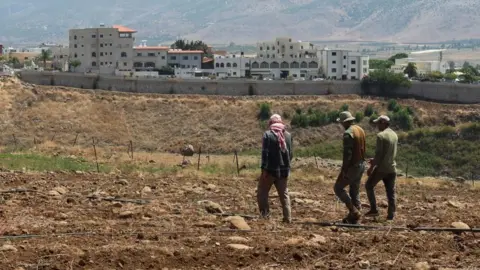
The Israeli military declined to comment on the allegations
Lebanon has accused Israeli aircraft of spraying an agricultural herbicide over southern villages at concentrations authorities described as dangerously high, raising concerns for food and environmental security.
The agriculture and environment ministries said laboratory tests confirmed the substance was glyphosate, a chemical used to destroy vegetation, with concentrations in some samples "between 20 and 30 times the levels usually accepted".
President Joseph Aoun condemned the spraying of what he described as "toxic substances", calling it a violation of Lebanese sovereignty and an environmental and health crime.
The Israel Defense Forces (IDF) told the BBC they had no comment on the matter.
The purpose behind the release of herbicide on the villages remains unclear.
Residents in several border villages reported the spraying, which comes more than a year after a ceasefire ended a war between Israel and the Lebanese Shia Islamist group Hezbollah.
Earlier in the week, United Nations peacekeepers in Lebanon said they had been notified by Israel of planned spraying near the border and were advised to take shelter.
The communication forced them to cancel some of their planned operations. They said this was not the first time Israeli forces had dropped unknown chemical substances from aircraft over Lebanese territory.
With tens of thousands still displaced after hostilities between Israel and Hezbollah in 2023-24, the challenges for returning home are compounded, according to Ramzi Kaiss, a researcher with Human Rights Watch in Lebanon.
"These areas are heavily dependent on agriculture - olive groves, tobacco, and other crops - and this incident complicates people's ability to return to their homes, maintain their livelihoods, and rebuild after extensive destruction," Kaiss said.
Experts warn that incidents like this do not only harm local ecosystems but also have broader economic consequences for Lebanon's farming sector.
In April 2025, the UN's Food and Agriculture Organization reported that the 2024 conflict had caused more than $700m (£515m; 600m euros ) in damage and losses to Lebanon's agricultural sector, particularly in the south and the Bekaa Valley.
Environmental groups like Green Southerners in Lebanon also expressed concern about the impact on agricultural production and soil fertility.
"These actions threaten ecosystems already damaged by white phosphorus, with serious risks to insect communities and natural pollinators, undermining biodiversity, food security, and local livelihoods," the group said in an Instagram post.
But there's no universal consensus on the risks of glyphosate.
The World Health Organization's (WHO) International Agency for Research on Cancer classifies it as "probably carcinogenic to humans," citing a link to non-Hodgkin lymphoma, while other regulatory bodies, including the US Environmental Protection Agency and European Food Safety Authority, have concluded it is unlikely to pose a carcinogenic risk to humans.
The Lebanese foreign ministry said it intended to submit a formal complaint against Israel to the UN Security Council.