 2 months ago
109
2 months ago
109

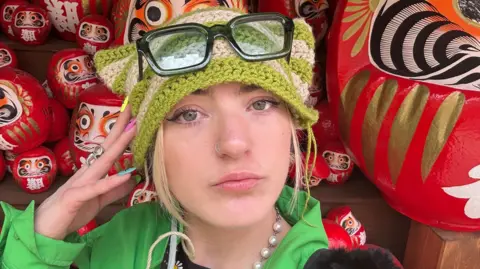 Izabel Rose
Izabel Rose hoped a month in Japan would help her quit ketamine - it did, but not in the way she expected
The night before her flight to Japan, Izabel Rose consumed the last of her large stash of ketamine with the genuine intention of having "one last hurrah".
Daily use of the drug had started to seriously affect her health.
Crying and in pain, she thought she'd hit rock bottom and desperately hoped that during this month-long trip, she'd get clean.
But she said: "As soon as I landed in Japan…I was on my phone, trying to source drugs."
That decision, made in the grip of her ketamine addiction, put her in a Japanese prison for five months.
"It has been the most traumatic experience of my life - but also probably the best thing that's ever happened to me."
- If you have been affected by any of the issues raised in this story, information and support can be found at the BBC's Action Line.
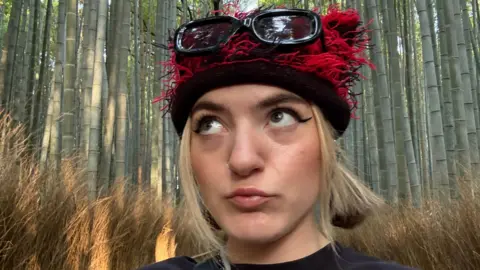 Izabel Rose
Izzy had been addicted to ketamine for just over a year before she went to Japan
Izzy's history with ketamine began when she started taking the drug while partying on London's rave scene.
As an illegal street drug, people take it for the feelings of disassociation, relaxation and euphoria. Part of its appeal is the low cost and easy accessibility.
Izzy says that among her friends, ketamine use became "very normalised" and the "weekend, party habit would turn into an everyday habit".
A year into what she now understands was an addiction to the drug, she started to feel the crippling side effects: difficulty urinating and abdominal pain that "felt like someone was standing on my chest".
"I used to spend days under a hot tap and it would be so hot on my stomach that it would leave burn marks," she says.
The only other thing that would numb the pain was to take more ketamine.
Izzy planned the trip to Japan to celebrate her 26th birthday and thought that getting away from London would help her kick the drug abuse.
But, she says, "addiction doesn't understand geography".
From her first stop in Tokyo, she sent a message to a friend in London asking if they knew anyone who could get her drugs.
It "never crossed my mind" to import drugs, she said, but her contact suggested that they send ketamine by post to the hotel she was moving on to in Osaka.
"My addiction was eating away at me, telling me it was a great idea," Izzy said.
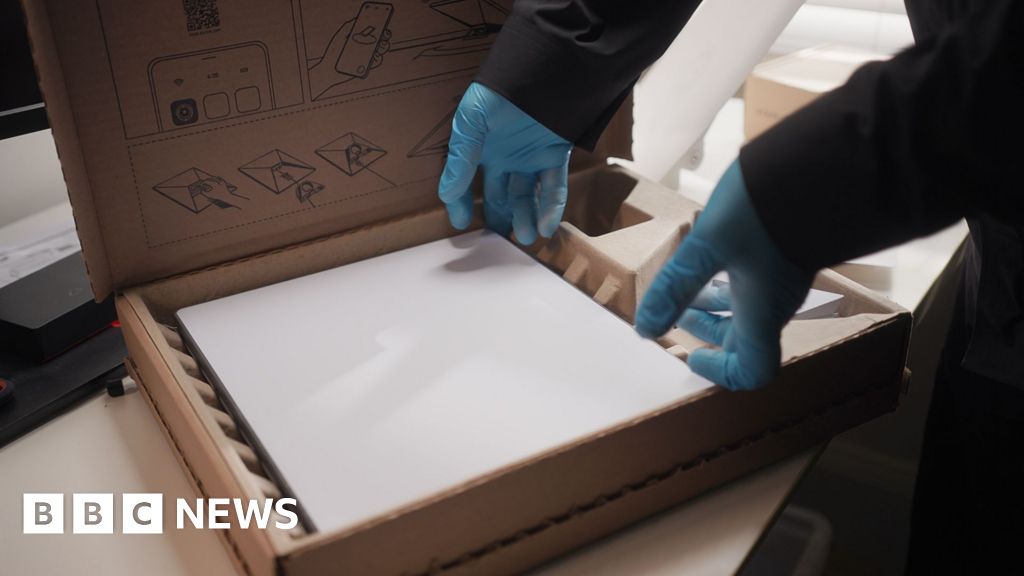
She sent her contact £150 for 7g (0.25oz) of ketamine, which arrived a week later inside a birthday card.
But it was intercepted at customs in Japan.
 Getty Images
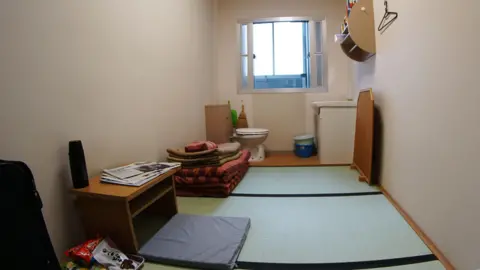
Izzy said this Japanese prison cell was similar to the one she was in, where she learned "discipline and living a healthy lifestyle"
Izzy said she "can't explain the fear" of finding Japanese police at her hotel door early in the morning, with a warrant to seize her phone and laptop.
She was interrogated for 24 hours and taken to the Osaka Detention Centre where she was prosecuted, and would then spend the following five months in solitary confinement.
For the first month she had a total communication ban, but that was eventually lifted because she fully complied with the prosecution process.
Even then, Izzy was not allowed phone calls. She could only write letters, which would take a month to send and another to receive a reply because they were translated and checked by the Japanese authorities.
Her voice wobbles and tears come to her eyes, as she recalled: "I caused a lot of pain and trauma to my family and I hope I can forgive myself for that - I'm still working on it. I'm very lucky to be here."
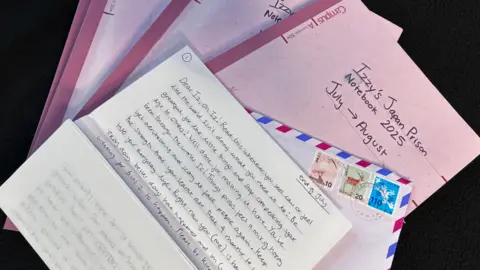
Izzy wrote letters to her future self and journals while in prison
Daily life in the Japanese jail was strict, with a regimented routine of sleep, meals and listening to the radio. She was allowed to shower three times a week.
Inmates were not permitted to speak to - or even look at - one another.
There was a lot of time for reflection and Izzy said she would write in her journal, meditate, read and pray - even though she had never been religious before.
It was the beginning of her addiction recovery.
Izzy was released in September 2025 and enjoyed Christmas with her family, reconnecting particularly with her younger sister.
Returning to London, she said, hasn't been easy.
"I still battle cravings every day and it is a struggle. I'm not perfect in this... but I have learned so much."
Izzy is determined to turn this "intense and healing" experience into something positive for herself - and others.
She has shared her story on TikTok, under the name Hyaku-Ban - the Japanese word for 100 - which she was given at the Osaka Detention Centre.
In being so open on social media, she said she was trying to "break the stigma" of addiction because she had learned that "when you feel shameful, it feeds your addiction".
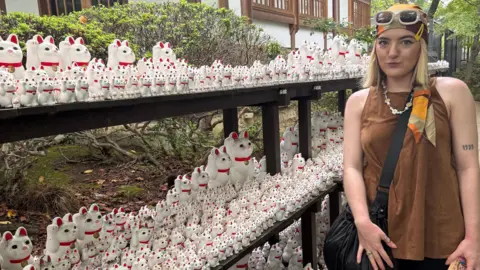 Izabel Rose
Izzy got to see some of Japan after being released from prison, before she came home to London
The Advisory Council on the Misuse of Drugs (ACMD) advised in recent days that ketamine should not be reclassified as a class A drug and should remain a class B controlled substance.
The government sought expert advice after a surge in the drug's prevalence among 16 to 24-year-olds in England, with figures showing that usage had tripled since 2016.
The ACMD stated that reclassification alone would not reduce the harm caused by ketamine.
Including the kind of dependency Izzy developed before serving her prison sentence in Japan.
Izzy said: "Addiction doesn't care where you're from, doesn't care what you're like or what your background is - it can affect anyone. And you don't know how quickly you can go on that downward spiral."
She hopes she can "make people feel less alone and hopefully stop someone making the same mistake that I did".
"I know my path is bright. And before, I was looking at death."