 2 months ago
79
2 months ago
79

 Getty Images
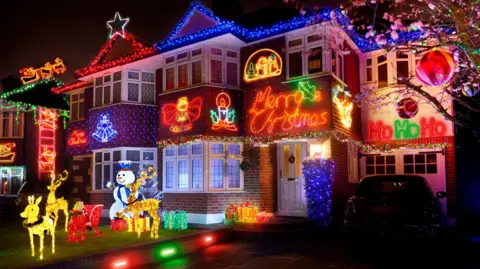
It might be a neighbour's car blocking your driveway, music vibrating through the walls, or a flashing inflatable Santa lighting up your bedroom at 3am.
Whatever the issue, you're unlikely to be alone. Neighbourly tensions often rise during the festive season and, while raising concerns can feel awkward, there are practical and legal ways to deal with disputes.
Here's how to deal with festive fallouts and keep the peace this Christmas.
Use a light timer
There's no law that specifies when Christmas lights must be turned off. However, artificial light can be classed as a statutory nuisance if it "interferes with the use or enjoyment of a home" or is likely to "injure health".
"Speaking to neighbours in advance or using a timer to switch lights off at unsociable hours can help avoid problems," lawyer Denise Nurse told the BBC's Morning Live.
Some lights are more disruptive than others. Sleep specialist Dr Nerina Ramlakhan says bright, flashing or blue-toned lights are particularly problematic.
"These wavelengths trigger photoreceptors in the eyes that suppress melatonin and shift our sleep-wake cycles," she says.
If you're affected, she recommends starting with a polite conversation. "They may not realise their lights are causing disruption and would be happy to make adjustments once they know," she says.
If that fails, you can complain to your local council, who are obliged to investigate. If the council agrees the lights amount to a statutory nuisance, it can issue an abatement notice which if ignored could result in a fine.
Warn them there will be noise
Even if you're only planning a one-off celebration, Nurse advises letting neighbours know in advance that they can expect some extra noise.
Jon from east London, who enjoys hosting parties with his wife Sharon, says he always does this.
"It's polite to let them know and apologise in advance if it disturbs them. We'll normally turn the music down by 11 or midnight - or sometimes just invite them to join us."
If you're affected by noise, Nurse recommends asking them to turn it down in the first instance. If that doesn't work you can contact your local council under the Environmental Protection Act to report excessive noise.
Parking can also be a point of contention over the festive period.
Doug, who lives in Windsor says neighbours and their visitors often block his driveway or access path. "It really winds me up," he says, explaining how his family have to walk across the garden or struggle to get out.
"I don't approach my neighbours because I always hope they'll realise how inconsiderate it is," he adds. "But it keeps happening."
"Public roads are public roads, but parking on your driveway is trespassing," Nurse says, suggesting putting up signs to help deter the behaviour.
If the problem continues, she suggsts contacting your local council.
Dumping your Christmas tree is fly-tipping
 Getty Images
Lobbing a Christmas tree into a park or over a fence might feel tempting once the festivities are over, but it counts as fly-tipping which is illegal and can result in fines, says Nurse.
Not all councils offer a scheme for recycling your Christmas tree but most in the UK do through drop off points or collections.
You can find your local scheme using websites like Recycle now, by entering your post code and finding your local drop-off or collection point or by checking your local council's website.
Alternatively, some charities offer collection for a donation or local garden centres may chip up your old trees for mulch.
It's not just trees that cause problems. Nurse says that households generate around a third more waste during the festive period which can often means bins spill over.
"Talk to your neighbours, and ask them to move anything that's causing an issue," she advises.
If you still can't resolve it
If you've tried talking and things still aren't improving or last beyond the festive period, Nurse recommends seeking help from Citizens Advice.
Each nation has a service that connects neighbours with trained, neutral mediators who help both sides reach a resolution.
Your local council may also be able to help you find a mediator, even if you're not a council tenant.
Citizens Advice advises keeping a detailed record of incidents, noting what happened, how long it lasted and how it affected you. When you report it let them know what steps you've taken to try and resolve it. Ask when you can expect a response and what to do if the problem gets worse.